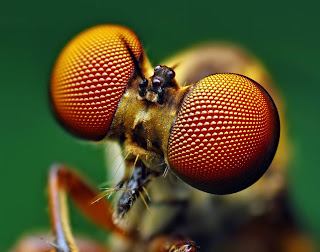
Robber fly - Nature photographer Thomas Shahan specializes in amazing portraits of tiny insects. It isn't easy. Shahan says that this Robber Fly (Holcocephala fusca), for instance, is "skittish" and doesn't like its picture taken.

Eye-popping bug photos

Nature by Numbers (Video)

"A Summary" – Apr 2, 2011 (Kryon channeled by Lee Carroll) (Subjects: Religion, Shift of Human Consciousness, 2012, Intelligent/Benevolent Design, EU, South America, 5 Currencies, Water Cycle (Heat up, Mini Ice Ace, Oceans, Fish, Earthquakes ..), Middle East, Internet, Israel, Dictators, Palestine, US, Japan (Quake/Tsunami Disasters , People, Society ...), Nuclear Power Revealed, Hydro Power, Geothermal Power, Moon, Financial Institutes (Recession, Realign integrity values ..) , China, North Korea, Global Unity,..... etc.) -
"The Quantum Factor" – Apr 10, 2011 (Kryon channeled by Lee Carroll) (Subjects: Galaxies, Universe, Intelligent design, Benevolent design, Aliens, Nikola Tesla (Quantum energy), Inter-Planetary Travel, DNA, Genes, Stem Cells, Cells, Rejuvenation, Shift of Human Consciousness, Spontaneous Remission, Religion, Dictators, Africa, China, Nuclear Power, Sustainable Development, Animals, Global Unity.. etc.) - (Text Version)


“ … Here is another one. A change in what Human nature will allow for government. "Careful, Kryon, don't talk about politics. You'll get in trouble." I won't get in trouble. I'm going to tell you to watch for leadership that cares about you. "You mean politics is going to change?" It already has. It's beginning. Watch for it. You're going to see a total phase-out of old energy dictatorships eventually. The potential is that you're going to see that before 2013.

They're going to fall over, you know, because the energy of the population will not sustain an old energy leader ..."

(Live Kryon Channelings was given 7 times within the United Nations building.)

"Update on Current Events" – Jul 23, 2011 (Kryon channelled by Lee Carroll) - (Subjects: The Humanization of God, Gaia, Shift of Human Consciousness, 2012, Benevolent Design, Financial Institutes (Recession, System to Change ...), Water Cycle (Heat up, Mini Ice Ace, Oceans, Fish, Earthquakes ..), Nuclear Power Revealed, Geothermal Power, Hydro Power, Drinking Water from Seawater, No need for Oil as Much, Middle East in Peace, Persia/Iran Uprising, Muhammad, Israel, DNA, Two Dictators to fall soon, Africa, China, (Old) Souls, Species to go, Whales to Humans, Global Unity,..... etc.)

"Recalibration of Free Choice"– Mar 3, 2012 (Kryon Channelling by Lee Caroll) - (Subjects: (Old) Souls, Midpoint on 21-12-2012, Shift of Human Consciousness, Black & White vs. Color, 1 - Spirituality (Religions) shifting, Loose a Pope “soon”, 2 - Humans will change react to drama, 3 - Civilizations/Population on Earth, 4 - Alternate energy sources (Geothermal, Tidal (Paddle wheels), Wind), 5 – Financials Institutes/concepts will change (Integrity – Ethical) , 6 - News/Media/TV to change, 7 – Big Pharmaceutical company will collapse “soon”, (Keep people sick), (Integrity – Ethical) 8 – Wars will be over on Earth, Global Unity, … etc.) - (Text version)

“… 4 - Energy (again)


The natural resources of the planet are finite and will not support the continuation of what you've been doing. We've been saying this for a decade. Watch for increased science and increased funding for alternate ways of creating electricity (finally). Watch for the very companies who have the most to lose being the ones who fund it. It is the beginning of a full realization that a change of thinking is at hand. You can take things from Gaia that are energy, instead of physical resources. We speak yet again about geothermal, about tidal, about wind. Again, we plead with you not to over-engineer this. For one of the things that Human Beings do in a technological age is to over-engineer simple things. Look at nuclear - the most over-engineered and expensive steam engine in existence!

Your current ideas of capturing energy from tidal and wave motion don't have to be technical marvels. Think paddle wheel on a pier with waves, which will create energy in both directions [waves coming and going] tied to a generator that can power dozens of neighborhoods, not full cities. Think simple and decentralize the idea of utilities. The same goes for wind and geothermal. Think of utilities for groups of homes in a cluster. You won't have a grid failure if there is no grid. This is the way of the future, and you'll be more inclined to have it sooner than later if you do this, and it won't cost as much….”


"Fast-Tracking" - Feb 8, 2014 (Kryon Channelling by Lee Carroll) - (Reference to Fukushima / H-bomb nuclear pollution and a warning about nuclear > 20 Min)

Obama unveils landmark regulations to combat climate change

Obama unveils landmark regulations to combat climate change
In a bid to combat climate change, US President Barack Obama announced the Clean Power Plan on Monday, marking the first time power plants have been targeted by mandatory regulations on carbon dioxide emissions in the US.
Google: Earthday 2013
Showing posts with label Monsanto. Show all posts

Wednesday, June 12, 2019

Dutchman wins prestigious prize for work with seeds and small farmers

DutchNews, June 11, 2019

Photo: Marcel Bakker via World Food Prize Foundation

This year’s World Food Prize, the most important global prize in the field of farming and food, has been awarded to Dutchman Simon Groot for his work in helping millions of smallholder farmers to use good seeds. 

This work, the organising committee says, ‘enabled them to to earn greater incomes through enhanced vegetable production, benefitting hundreds of millions of consumers with greater access to nutritious vegetables for healthy diets’. 

‘Simon Groot has dedicated his life to improving the livelihoods of millions around the world,’ Kenneth Quinn, president of the World Food Prize Foundation, said at the award announcement on Monday. 

Groot, now 84, and his partner in the Philippines, started East-West Seed in 1982. Today, the team has developed vegetable varieties with enhanced disease resistance and significantly higher yields which are now used across Asia and beyond. The company serves 19 million smallholder farmers in more than 60 tropical countries.


In an interview with the Volkskrant, Groot said he thinks it regrettable that seed production is in the hands of a few big companies such as Bayer/Monsanto and Syngenta. 

The big companies, he said, are limiting supplies because there is little money to be made from minor breeds. ‘Big companies look at the importance of shareholders,’ he said. ‘Traditional seed companies put the interests of farmers first. We are friends to farmers.’ 

The prize was founded in 1986 by Norman E. Borlaug, recipient of the 1970 Nobel Peace Prize. Groot is the first Dutch national to take the prize.

Thursday, November 9, 2017

France to oppose EU's 5-year renewal for weedkiller glyphosate

Yahoo – AFP, November 8, 2017

Activists have called for glyphosate to be banned (AFP Photo/JOHN THYS)

Paris (AFP) - France will oppose a European Commission proposal to renew authorisation for controversial weedkiller glyphosate for five years instead of 10, saying Wednesday the new cutoff should be three years.

"France's position is three years," Environment Minister Nicolas Hulot, a celebrity green activist, told French media ahead of a vote by the 28 EU member states in Brussels on Thursday.

The Commission, the EU's executive arm, had originally recommended approving the herbicide's use for another decade from December 15 but experts balked amid growing uproar over its alleged dangers.

Monsanto, the US agro giant that makes weedkiller Roundup, insists glyphosate meets the standards required to renew its European licence.

Glyphosate critics, led by environmental campaigners Greenpeace, are calling for an outright ban in Europe and last month activists handed the EU a petition signed by more than 1.3 million people backing such a move.

They point to a 2015 study by the World Health Organization's (WHO) International Agency for Research on Cancer that concluded it was "probably carcinogenic".

However, the European Food Safety Authority and the European Chemicals Agency both say glyphosate is unlikely to cause cancer in humans, in line with a 2016 review carried out by WHO experts and the UN Food and Agriculture Organization.

"The big change is that we are talking about an end, not simply a renewal," Hulot told French television BFMTV. "France is in the vanguard on this issue."

The minister said he sympathised with farmers "who are a bit overwhelmed by all the constraints imposed on them (but) over these three years we will be able to work towards alternatives" to glyphosate.

The current licence for using glyphosate expires on December 15.


Tuesday, May 3, 2016

Leaked papers allege US pressuring EU over TTIP free trade deal

German media say secret documents reveal the US has pressured the EU to approve a transatlantic free trade deal. The reports say Washington may block easier car exports if the EU doesn't open up its agricultural market.

Deutsche Welle, 2 May 2016


German media say 240 pages of text from secret transatlantic free trade talks obtained by Greenpeace show that the US is pressuring the EU.

Washington was blocking European car exports into the US to force the 508-million-population EU to buy more environmentally risky US farm produce, claimed the "Süddeutsche Zeitung" (SZ) newspaper and two German public television channels.

Greenpeace said it would publish the material later on Monday, contrary to strict secrecy maintained by US and EU negotiating teams during three years of talks on the proposed Transatlantic Trade and Investment Partnership (TTIP).

The TTIP is unpopular in Germany. On the eve of US President Barack Obama's visit to a major Hanover trade exhibition last week, tens of thousands of opponents demonstrated.

Documents seem authentic

The German news agency DPA said persons close to the talks had confirmed the authenticity of the documents. Accessibility so far has been strictly limited.

By blocking an easing of car exports into the US, Washington wanted the EU to replace its precautionary consumer safety principle with the liberal US approach of permitting foodstuffs until risks are proven, said the media outlets, including the ARD network's channels NDR and WDR.

The EU's principle that goods must first be certified as safe has often been cited by the EU to constrain imports of American gene-manipulated and hormone-treated produce.

TTIP opponents rallied as Obama headed to Hannover

Public arbitration panels blocked

The German outlets said the documents disclosed by Greenpeace also showed that the US was blocking an EU demand that arbitration panels to handle corporate lawsuits be public not private as sought by Washington.

Greenpeace trade expert Jürgen Knirsch said what had so far trickled out of the talks had "sounded like a nightmare."

"Now we know that this could very much become reality," said Knirsch.

The head of Germany's consumer advisory bureaus Klaus Müller told the SZ that the texts confirmed "pretty much all of our fears in terms of what the US-Americans want to achieve on the food produce market through TTIP."

Merkel and Obama called for 'urgency' on TTIP

Urgency sought by Obama, Merkel

Visiting Hanover last week, US President Barack Obama together with German Chancellor Angela Merkel called for urgency at the TTIP negotiations.

Obama said he hoped it would the talks would be concluded in 2017, beyond the next US presidential election due in November this year.

Last Friday in New York, the lead US and EU negotiators - US Trade Representative Daniel Mullaney and the European Commission's Ignacio Garcia Bercera - said they hoped to reach a deal before Obama leaves office in January.

ipj/jr (dpa, AFP, Reuters)
Related Article:


Lack of transparency is being criticized: TTIP negotiations have been taking 
place behind closed doors

Monday, October 5, 2015

Nineteen EU countries seek GMO opt-out

Nineteen EU member states have requested to opt-out of producing genetically modified crops, effectively banning their cultivation. Germany requested a partial opt-out that would allow research into the biotechnology.

Deutsche Welle, 4 Oct 2015


More than half of all EU member states met an October 3 deadline requesting the abilityto opt-out of the cultivation of genetically modified organisms (GMO), the European Commission reported on Sunday.

European Commission spokesman Enrico Brivio said on Sunday that 17 of the member states requested to fully opt-out of GMO cultivation, while Belgium and Britain asked that the opt-out mechanism be reserved for only part of their country's respective territories.

Meanwhile, Germany requested a partial opt-out that would still allow GMO research.

The full opt-out requests were made by Austria, Bulgaria, Croatia, Cyprus, Denmark, France, Greece, Hungary, Italy, Latvia, Lithuania, Luxembourg, Malta, the Netherlands, Poland, and Slovenia.

The move allows the countries to ban GMO even if the EU provides approval for their cultivation, according to a law signed earlier this year.

The EU has solely approved the cultivation of one GMO, namely Monsanto's GM maize MON 810. However, eight applications submitted to the EU for review are currently pending.


The cultivation of GMO in Europe has been widely divisive subject, with environmentalists saying that it would damage biodiversity.

Agricultural biotechnology companies, such as Monsanto, have rebuked such criticism as scientifically baseless.


Brivio noted that the number of requests showed that the new law providing opt-outs at a member-state level offers "a necessary legal framework to a complex issue."

Companies are provided one month to comment on the requests.

ls/sms (Reuters, dpa)
“..  Health

Normal good health is turning to simple physics for some of the simplest things. New kinds of foods are being grown with new physics, not chemistry. These will be physic-foods [Kryon name] that are not genetically altered or chemically altered, but benevolently enhanced by physics! This causes a new kind of super growth that can feed the planet in a way it's never been fed before. It will create food that is resistant to absolutely everything - insects, bacteria and disease - all through physics. Who thought of that? What you're expecting in the future regarding health is based upon the past. The big filter of past knowledge keeps you from thinking out of the box. You don't know what you don't know.  ….”

Thursday, August 27, 2015

Monsanto drops Syngenta takeover bid

US agrochemicals giant Monsanto has dropped its unwelcome takeover bid for Swiss rival Syngenta. Antitrust concerns were among Syngenta's reasons for rejecting its American suitor, the company said.

Deutsche Welle, 26 Aug 2015

Monsanto farmer in the US

Monsanto, the giant US corporation that produces pesticides and genetically engineered pesticide-resistant seeds, announced Wednesday in New York that it would discontinue its attempt to take over its Swiss rival Syngenta.

"Without a basis for constructive engagement from Syngenta, Monsanto will continue to focus on its growth opportunities built on its existing core business to deliver the next wave of transformational solutions for agriculture," Monsanto said in a statement. It also said it would resume a share buyback program.

Syngenta confirmed it had rejected Monsanto's latest and last offer, which "significantly undervalued [Syngenta] and was fraught with execution risk."

Monsanto's most recent bid, proposed August 18, was worth about $46 billion (40 billion euros). Over the past weeks, Syngenta had repeatedly said it was worried a merger deal between the two giants would be blocked on antitrust grounds.

Share turmoil

Monsanto shared have droped 13 percent between August 18 and 25 amid global market turmoil. With nearly half Monsanto's takeover offer based on a share swap, the merger would have entailed significant exposure to market volatility.

Syngenta said in its statement Wednesday that "recent market volatility" had "highlighted the significant risk" to Syngenta's shareholders associated with the proposed merger.
After the two companies announced merger talks were over, Syngenta shares dropped 18 percent and Monsanto shares jumped by over 8 percent.

Location, location

Monsanto had envisioned shifting the merged company's headquarters from Monsanto's current home base of St Louis, in the midwestern US state of Missouri, to Britain.

The idea, according to Monsanto chief executive Hugh Grant in an April 18 letter to Syngenta executives, was that "our merger will create a new global enterprise focused on future growth across all geographies... The combination of our companies would redefine the future of agriculture."

Syngenta said Monsanto had failed to provide "sufficient clarity" on a number of concerns, including regulatory risk, the tax consequences of shifting the company's registered headquarters from the US to Britain, and the estimated financial benefits of the proposed merger.

"We engaged with Monsanto in good faith and highlighted those key issues which required more concrete information in order to continue a dialogue. We take note of Monsanto's decision," Syngenta chairman Michel Demare said, adding that "our Board is confident Syngenta's long-term prospects remain very attractive."

Mergers and emerging monopolies

Syngenta was itself formed in 2000 as a result of the merger of Swiss-based Novartis Agribusiness and UK-based Zeneca Agrochemicals, which were the agrochemical, seeds and biotech businesses of pharmaceuticals and agrochemical giants Novartis and Zeneca.

Mergers in the agrochemicals industry have led to a situation where only six companies dominate the bulk of global agrochemicals sales, including Syngenta, Bayer CropScience, BASF, Dow Agrosciences, Monsanto and DuPont.

nz/hg (Reuters, AFP)
“..  Health

Normal good health is turning to simple physics for some of the simplest things. New kinds of foods are being grown with new physics, not chemistry. These will be physic-foods [Kryon name] that are not genetically altered or chemically altered, but benevolently enhanced by physics! This causes a new kind of super growth that can feed the planet in a way it's never been fed before. It will create food that is resistant to absolutely everything - insects, bacteria and disease - all through physics. Who thought of that? What you're expecting in the future regarding health is based upon the past. The big filter of past knowledge keeps you from thinking out of the box. You don't know what you don't know.  ….”

Monday, August 10, 2015

Scotland to ban genetically modified crops

Scotland's government says it plans to ban the cultivation of genetically modified crops. While widely grown in the Americas and Asia, there is more skepticism over the practice in Europe.

Deutsche Welle, 9 Aug 2015


Scotland's Environment Ministry announced Sunday it intended to ban the growth of genetically modified crops on its territory in order to cultivate its "clean and green brand" of products.

No GM crops are currently grown commercially in Britain, though the central government in London says it supports the use of GM crops if they are safe.

Richard Lochhead, the Scottish government's minister for the environment, food and rural affairs, said Sunday he planned to take advantage of new European Union rules allowing countries to opt out of growing EU-authorized GM crops.

GM crops, including maize, have been the
subject of numerous protests in the EU
"The Scottish government will shortly submit a request that Scotland is excluded from any European consents for the cultivation of GM crops, including the variety of genetically modified maize already approved and six other GM crops that are awaiting authorization," Lochhead said in a statement.

The minister said there is no domestic market for GM crops and it wanted to strengthen its brand of exports, especially its food and drink sector worth an annual 19.78 billion euros ($21.7 billion).

"Scotland is known around the world for our beautiful natural environment - and banning growing genetically modified crops will protect and further enhance our clean, green status," Lochhead said.

Health debate

GM crops are the subject of global debate, with some environmental and health groups questioning their environmental impact. Producers, however, insist they are safe.

The Scottish government in Edinburgh has been responsible for mainly domestic policies, including agriculture, since 1999 when power was devolved from the central government in London.

jar/cmk (Reuters, AFP)
Related Article:

“..  Health

Normal good health is turning to simple physics for some of the simplest things. New kinds of foods are being grown with new physics, not chemistry. These will be physic-foods [Kryon name] that are not genetically altered or chemically altered, but benevolently enhanced by physics! This causes a new kind of super growth that can feed the planet in a way it's never been fed before. It will create food that is resistant to absolutely everything - insects, bacteria and disease - all through physics. Who thought of that? What you're expecting in the future regarding health is based upon the past. The big filter of past knowledge keeps you from thinking out of the box. You don't know what you don't know.  ….”

Sunday, April 19, 2015

GMO wheat not allowed in Taiwan: FDA

Want China Times, CNA 2015-04-18

A farmer harvests wheat at a farm in Hsinchu, March 29. (File photo/Chen Yu-hsien)

Taiwan's Food and Drug Administration on Friday dismissed concerns of genetically modified wheat grown in the United States entering Taiwan's market, saying Taiwan bans imports of such wheat.

Taiwan allows genetically modified soybeans and corn but does not allow imports of genetically modified wheat, said Lee Wan-chen, a section chief at the FDA.

During a recent check on packaged food products, the FDA did not find any genetically modified wheat on the local market, Lee added.

The statement was made as bakeries and wheat mills face doubts from local customers that wheat from the US might be genetically modified and are receiving requests to purchase wheat from Japan and Canada.

Concerns about US wheat first arose in 2013 when GMO wheat tested by US seed company Monsanto without approval from US regulators contaminated a regular wheat farm in Oregon, prompting Japan to suspend some wheat imports.

The US Wheat Associates' Taiwan office dismissed the suspicions, saying the US does not produce genetically modified wheat.

The US Department of Africulture has worked to remove any genetically engineered wheat that remained at the site of Monsanto's experiment, which is no longer used by the company, said Ron Lu, head of the association's Taiwan office.

It has also conducted a check on wheat products in the country and found that none of them had been contaminated by Monsanto's genetically engineered wheat, Lu said.

In addition, all US-grown wheat sold to Taiwan comes with certificates verifying that it is non-GMO, he said.

US-sourced wheat accounts for 80% of Taiwan's total wheat imports. Another 18% of its wheat imports come from Australia and the remaining 2% comes from Canada.

Related Article:


Thursday, January 15, 2015

Greenpeace: GMO food law has flaws

As the European Parliament grants EU countries greater individual freedom over the use of genetically modified (GM) crops, DW talks to Greenpeace EU agriculture policy director, Marco Contiero for his view.

Deutsche Welle, 15 Jan 2015


What is your response to the new legislation?

Greenpeace finds that it does provide member states with a new right, but the law has some major flaws. The first is that it basically grants GM companies the power to negotiate with elected governments, which we criticize. Secondly, it excludes the strongest legal arguments to ban GM crops in national territories, which is evidence related to environmental impacts and risks.

How does the law change GM regulation within Europe?

It gives member states two new options: From now on they will be allowed to restrict the cultivation of GM crops in their territory, and they can decide whether to negotiate with companies and demand that companies exclude their territory from the request for authorization. The other option that member states have is to directly and pro-actively impose a national ban of the cultivation of GM crops in their territory.

Could you explain what you perceive to be the limitations of the legislation?

The concerns we have relate to political and legal issues. From a political point of view, we consider it problematic that companies have the right to negotiate with elected governments. It grants private companies a formal role in the process of banning or restricting GM cultivation, and that provides companies with a very relevant avenue to influence governments. The legal concern we have relates to the power to ban GM crops.

What does the new legislation mean for the countries that have already banned the use of GM crop cultivation?

These countries are expected to confirm their bans and they will have the choice to enact an official ban or to request the companies that have applied for authorization at EU level. In this case we are only talking about Monsanto, but they will have to ask Monsanto whether it is willing to exclude the territories of these nine member states from its application at EU level.

Which countries in Europe are we likely to see allowing GM crops?

Those that are already doing it. Spain, where GM maize is already cultivated. Then the UK, the Netherlands, Portugal, the Czech Republic, Slovenia and Romania.

What are the dangers of using of GM crops?

The reason for our concern regarding the cultivation of GM crops relates to the fact that technology through which we create these crops, does not understand the way in which the genome of these plants works. This means the technology is prone to have unintended and unpredictable impacts on the way in which the genome of these plants actually work.

The other problem is that we are not talking about the confined use in laboratories, but about the deliberate release of genetically modified living organisms into the environment, a place where there can be no control or recall. Additionally there are known impacts. Maize crops that release a toxin can have an impact on other beneficial insects aside from the pests that they are supposed to attack.

Who stands to benefit from the opt-out measure?

The main objective of this legislation is for Europe to start authorizing GM crops more quickly. So biotech companies will benefit. Aside from that, governments that have criticized GM crops in the past now have a clearer, if legally weak, tool to ban the cultivation of GM crops in their countries.

What does it mean for a country that bans GM crop cultivation, but which shares a border with one that permits it?

If a country that decides to grow GM crops, but which has a neighbor that decides against, the country that wants to grow them will have to put in place co-existence measures around the border areas.

Greenpeace believes the government of a country that allows the cultivation of GM crops should be obliged to put in place co-existence measures in order to protect conventional and organic farmers from contamination via GM crops.

What does this mean for European food quality?

It is really a political question. The EU can't compete with big producers of commodities like the US or Brazil, where you have a massive monoculture of these products. What Europe should do is to invest in quality, diversity, local production, and produce with an indication of origin, products that will have a much stronger place in the international market.

How should the EU be framing environmental policy in the future?

We believe the concerns that have been expressed over GM crops during the past decade and a half should be used to address the real problem, which is the way we farm. The way we design our food system should be radically changed. Agriculture is facing challenges, one of which is climate change, so we have to redesign our agricultural system to ensure that our farming practices are based on valorizing biodiversity and agricultural diversity.

We need to make sure we build resilient systems, systems that can resist shocks such as climate shocks. Maintaining a system that favors monocultures of identical plants that can be attacked by pests and destroyed by erratic weather conditions is not the way forward.

The interview was conducted by Charlotta Lomas. It has been condensed and edited for clarity.

Tuesday, August 26, 2014

End of the line: GMO production in China halted

RT.com, August 21, 2014

Reuters / StringerReuters / Stringer

In a surprise U-turn, China’s Ministry of Agriculture has decided not to continue with a program which developed genetically-modified rice and corn. Some environmentalists say public concerns about GM crops played a key role in the decision.

On August 17, when these permits were up for renewal, the Ministry of Agriculture decided not to extend them. In 2009, the ministry's Biosafety Committee issued approval certificates to develop the two crops, rice and corn.

Developed by the Huazhong Agricultural University, near Wuhan, it was hoped that the GMO strains would help to reduce pesticide use by 80 percent, while raising yields by as much as 8 percent, said Huang Jikun, the chief scientist with the Chinese Academy of Sciences, told Reuters in 2009. It is illegal to sell genetically-modified rice on the open market in China.

However in July, GM rice was found on sale in a large supermarket in Wuhan, which is just across the Yangtze River from the Huazhong Agricultural University, where the product was developed, which caused a public outcry.

"We believe that loopholes in assessing and monitoring [GMO] research, as well as the public concern around safety issues are the most important reasons that the certifications have not been renewed," Wang Jing, a Greenpeace official based in Beijing, wrote in an email to ScienceInsider.

According to the South China Morning Post, state television commissioned tests on five packets of rice, which were picked at random, and found three contained genetically-modified rice. It is illegal to sell or commercially grow GM rice in mainland China. The safety certificates issued in 2009 only allowed the rice to be planted for research purposes, but never for sale on the open market.

The strain, which was found, was one of two developed by Dr. Zhang Oifa, who is a professor at the Huazhong Agricultural University. He said, "it was not impossible" for the seeds to be put on to the open market.

"You can't say [the seeds] were leaked on purpose. It's possible the seed companies have taken away the seeds and reproduced them illegally," he said, as reported by the South China Morning Post.

However, Huang Jikun also believes that public opinion was not the only reason why the project was shelved. He stated that China is reaching self-sufficiency in terms of rice production, so therefore there was no point in producing genetically modified versions. China exports very little rice as almost all of it is consumed within its domestic market. Huang also admitted, "rising public concerns [about the] safety of GM rice" likely also played a role.

Cong Cao, who is an associate professor at the University of Nottingham in the UK, was scathing of the decision. Writing in ‘The Conversation’ journal, he said the move “signals a major blow to the fight to establish GM food in China.”

Cao believes there is no logic behind the judgment adding that “Anti-Western sentiment has been judged more convincing than a raft of studies endorsing the merits of agro-biotechnology. Government support for GM food is dwindling fast, and it seems safe to say that the opportunity to commercialize GM rice – and with it the chance to help address some of China’s most urgent problems – is all but gone.”

The production of GM corn has not received as much skepticism, as it is mainly fed to livestock, according to Huang Jikun. Nevertheless, like rice, it has also not had its license renewed.

Related Article:


Wednesday, July 30, 2014

China vows zero tolerance for GM rice

English.news.cn   2014-07-29

A Greenpeace report says 24 Chinese
 kids have been used for a U.S. GM rice
experiment. (China.org.cn)
BEIJING, July 29 (Xinhua) -- Chinese authorities have vowed zero tolerance and harsh punishments for illegal sales and growing of genetically modified (GM) crops days after media exposure of GM rice on sale at a supermarket in central China.

"The ministry will punish any companies or individuals who illegally grow or sell GM grains, and there will be no tolerance for these practices," said a statement sent to Xinhua on Tuesday by the office in charge of GM food safety with the Ministry of Agriculture (MOA).

China Central Television (CCTV) found GM rice, which is illegal to sell or grow commercially in China, on sale in a supermarket in Wuhan, capital city of central Hubei Province, the broadcaster reported on Saturday.

CCTV commissioned tests on five packs of rice picked at random from the supermarket's shelves. Three were found to contain a GM variety.

CCTV also found evidence that GM rice was being sold in neighboring Hunan, Anhui and Fujian provinces.

While working to develop modern biotechnology, China has taken a wary approach to GM crops, fearing possible risks.

It has allowed several GM crops to be grown, including cotton, peppers, tomatoes and papayas, and has authorized imports of GM soybeans and corn.

However, it does not allow commercial production or sale of GM grains, including rice, although the authorities have approved the experimental planting of two strains of pest-resisted GM rice.

The safety certificates issued for this experimental planting in 2009 expire this year, and commercial production is yet to be started.

Authorities have stressed that this approval of experimentation does not equate to a broader official favoring of GM grains.

"The granting of safety certificates for GM food is not equal to allowing commercial production," Tuesday's statement quoted an anonymous official as saying.

Approval is needed for GM crops, be it production of seeds, testing or growing, the official added.

The ministry has ordered all provincial agricultural authorities to strengthen oversight and fight illegal production and sale of seeds for GM crops, according to the statement.

Chen Xiaohua, deputy minister of the MOA, said earlier this year that China would continue to take an "active and cautious" policy toward GM crops and had set no timetable on the commercial production of GM products.

Sunday, June 22, 2014

Small farms making big impact in US agriculture

Yahoo – AFP, Juliette Michel, 22 June 2014

Danelle Myer calls her business "One Farm", June 18, 2014 in Logan, Iowa
(AFP Photo/Juliette Michel)

Logan (United States) (AFP) - As a teenager, Danelle Myer wanted nothing more than to leave her family's farm in Iowa and become a big-city advertising executive.

Now, the 42-year-old juggles orders for cabbage and deals with hail damage on her patch of land.

After building a career in public relations, Myer returned three years ago to her rural roots in the US farm belt -- the tiny Iowan town of Logan, less than 40 miles (60 kilometers) north of Omaha, Nebraska.

"In my 20s, my health was not the greatest. I started realizing what we put in our body matters. I became more health-conscious," Myer said.

Danelle Myer washes radishes just 
picked on her farm, June 18, 2014 in
Logan, Iowa (AFP Photo/Juliette Michel)
"What pushed me over the edge was the land owned by my family," said the fifth-generation farmer, as she sat cross-legged among her plants in a pink tank top and flip-flops.

"It is an immense privilege and I should do something about it."

But she had no intention of taking up the conventional farming practices of her parents, who raise corn, soybeans and cattle.

For her, it would be a truck farm on a small, sloping piece of land "all pesticide- and GM-free," she said, referring to genetically modified seeds that dominate much of US corn and soybean crops.

In the heart of the Midwest, the breadbasket of the United States and known for agricultural productivity, Myer's story is no longer so unusual.

Small farms booming

In the land of industrial-scale agriculture, "truck farming" -- small-scale fresh fruit and vegetable production -- is booming, encouraged by the rising consumer interest in food grown locally, an industry worth $7 billion.

The country has 8,100 farmers' markets, and nearly 150,000 farmers and ranchers sell their products directly to consumers. Some 44 percent of schools have links to local farms for student meals.

To encourage the trend, the US government on June 9 launched "Local Food, Local Places", a program that provides experts in agricultural, transportation, the environment and the regional economy to rural communities to help them build local food systems.

"The changes are tangible and inspiring," said Alice Topaloff, a young French-American agricultural engineer working in Iowa.

"The development of local farms is catching on, and in a more spectacular way than in France," she said.

"Certainly that is because people are distancing themselves from farms with thousands of acres (hectares) and where food culture isn't as anchored to locally grown food."

But it is a tough row to hoe.

The first year, in 2010, Myer sold $2,200 worth of vegetables. Her target this season is $20,000. Even if she makes that, it will not be enough to pay the bills. She works part-time in public relations to get by.

"To make a good standard of living for a conventional corn and soybean farm, it takes up to 2,000 acres (800 hectares). If you want the same standards of living on a vegetable farm, you could probably do it on 10 acres," said Craig Chase, an economist at Iowa State University who has been watching the rise of sustainable, organic, and local farming in the US since the 1980s.

A jump in land prices in the Midwest in recent years is also a major reason why young people are setting up vegetable and small farms, Chase said.

For the children of farmers who cannot split up the farm without making it less profitable, and for immigrants and organic farmers wanting their own operation, the price of land is out of reach, he said.

"If your land is $10,000 an acre and you want to begin farming, you are looking for a high-value crop versus a high-volume, lower-value crop."

'People just like the taste'

Consumers' desire for healthier, more flavorful food is a driver. Topaloff said food security also plays a role.

Unlike in Europe, she said, "here, people are not particularly worried about genetically modified foods."

Danelle Myer shows the field where she
 will grow most of her vegetables next
 year, located next to her house, June 18, 
2014 in Logan, Iowa (AFP Photo/Juliette
Michel)
"By contrast, because the agri-food industry is concentrated in the hands of three or four companies, people are concerned that a terrorist attack could have a giant impact."

Bending over to pull out weeds from her new greenhouse, Myer insisted she would not trade anything in the world for the hours spent among her radishes, sweet potatoes and chamomile, specially raised for a herbalist in Omaha.

She seemed exhausted but determined.

Smiling broadly, Myer said she gets lots of encouragement -- from some because she is a woman, from others because she is a "hometown girl" or because she grows organically.

"Some people just like the taste of my food," she said.

Related Article:

(39) Question: Dear Kryon: I've noticed how many children are developing severe allergies to foods (my daughter included). When I've researched this, it seems that most of the allergies are essentially to seeds, grains, legumes, eggs, and dairy. I've noticed that these foods all hold the potential for life, or in the case of dairy, are essentially used to sustain the first stages of life in an animal's baby. My feeling is that because we're not releasing the life force within these foods (that is, sprouting, etc.), they're becoming harmful to us. I would like your impressions of this.

Answer: For thousands of years, these foods have worked for humanity. In these cases you speak about, the main culprit continues to be the way in which these foods are collected and processed. You won't find these allergies in third-world countries, and you won't find them within the children who work on farms, where they eat the foods directly. There will eventually have to come a day when you relax some of your efficiency attributes and go back to the way food was meant to be collected and eaten. And yes... there are effects from how the dairy animals are treated, too. Going back to some basics will help, and so will eliminating some of the procedures that supposedly create a "safer food." These procedures have instead made them begin to look like foreign food to the Human body.