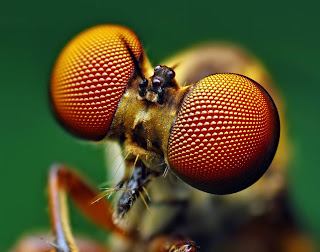
Robber fly - Nature photographer Thomas Shahan specializes in amazing portraits of tiny insects. It isn't easy. Shahan says that this Robber Fly (Holcocephala fusca), for instance, is "skittish" and doesn't like its picture taken.

Eye-popping bug photos

Nature by Numbers (Video)

"A Summary" – Apr 2, 2011 (Kryon channeled by Lee Carroll) (Subjects: Religion, Shift of Human Consciousness, 2012, Intelligent/Benevolent Design, EU, South America, 5 Currencies, Water Cycle (Heat up, Mini Ice Ace, Oceans, Fish, Earthquakes ..), Middle East, Internet, Israel, Dictators, Palestine, US, Japan (Quake/Tsunami Disasters , People, Society ...), Nuclear Power Revealed, Hydro Power, Geothermal Power, Moon, Financial Institutes (Recession, Realign integrity values ..) , China, North Korea, Global Unity,..... etc.) -
"The Quantum Factor" – Apr 10, 2011 (Kryon channeled by Lee Carroll) (Subjects: Galaxies, Universe, Intelligent design, Benevolent design, Aliens, Nikola Tesla (Quantum energy), Inter-Planetary Travel, DNA, Genes, Stem Cells, Cells, Rejuvenation, Shift of Human Consciousness, Spontaneous Remission, Religion, Dictators, Africa, China, Nuclear Power, Sustainable Development, Animals, Global Unity.. etc.) - (Text Version)


“ … Here is another one. A change in what Human nature will allow for government. "Careful, Kryon, don't talk about politics. You'll get in trouble." I won't get in trouble. I'm going to tell you to watch for leadership that cares about you. "You mean politics is going to change?" It already has. It's beginning. Watch for it. You're going to see a total phase-out of old energy dictatorships eventually. The potential is that you're going to see that before 2013.

They're going to fall over, you know, because the energy of the population will not sustain an old energy leader ..."

(Live Kryon Channelings was given 7 times within the United Nations building.)

"Update on Current Events" – Jul 23, 2011 (Kryon channelled by Lee Carroll) - (Subjects: The Humanization of God, Gaia, Shift of Human Consciousness, 2012, Benevolent Design, Financial Institutes (Recession, System to Change ...), Water Cycle (Heat up, Mini Ice Ace, Oceans, Fish, Earthquakes ..), Nuclear Power Revealed, Geothermal Power, Hydro Power, Drinking Water from Seawater, No need for Oil as Much, Middle East in Peace, Persia/Iran Uprising, Muhammad, Israel, DNA, Two Dictators to fall soon, Africa, China, (Old) Souls, Species to go, Whales to Humans, Global Unity,..... etc.)

"Recalibration of Free Choice"– Mar 3, 2012 (Kryon Channelling by Lee Caroll) - (Subjects: (Old) Souls, Midpoint on 21-12-2012, Shift of Human Consciousness, Black & White vs. Color, 1 - Spirituality (Religions) shifting, Loose a Pope “soon”, 2 - Humans will change react to drama, 3 - Civilizations/Population on Earth, 4 - Alternate energy sources (Geothermal, Tidal (Paddle wheels), Wind), 5 – Financials Institutes/concepts will change (Integrity – Ethical) , 6 - News/Media/TV to change, 7 – Big Pharmaceutical company will collapse “soon”, (Keep people sick), (Integrity – Ethical) 8 – Wars will be over on Earth, Global Unity, … etc.) - (Text version)

“… 4 - Energy (again)


The natural resources of the planet are finite and will not support the continuation of what you've been doing. We've been saying this for a decade. Watch for increased science and increased funding for alternate ways of creating electricity (finally). Watch for the very companies who have the most to lose being the ones who fund it. It is the beginning of a full realization that a change of thinking is at hand. You can take things from Gaia that are energy, instead of physical resources. We speak yet again about geothermal, about tidal, about wind. Again, we plead with you not to over-engineer this. For one of the things that Human Beings do in a technological age is to over-engineer simple things. Look at nuclear - the most over-engineered and expensive steam engine in existence!

Your current ideas of capturing energy from tidal and wave motion don't have to be technical marvels. Think paddle wheel on a pier with waves, which will create energy in both directions [waves coming and going] tied to a generator that can power dozens of neighborhoods, not full cities. Think simple and decentralize the idea of utilities. The same goes for wind and geothermal. Think of utilities for groups of homes in a cluster. You won't have a grid failure if there is no grid. This is the way of the future, and you'll be more inclined to have it sooner than later if you do this, and it won't cost as much….”


"Fast-Tracking" - Feb 8, 2014 (Kryon Channelling by Lee Carroll) - (Reference to Fukushima / H-bomb nuclear pollution and a warning about nuclear > 20 Min)

Obama unveils landmark regulations to combat climate change

Obama unveils landmark regulations to combat climate change
In a bid to combat climate change, US President Barack Obama announced the Clean Power Plan on Monday, marking the first time power plants have been targeted by mandatory regulations on carbon dioxide emissions in the US.
Google: Earthday 2013
Showing posts with label Flora - Fauna. Show all posts

Tuesday, May 31, 2016

Dutch garden featuring dye plants wins prize at Chelsea Flower Show

DutchNews, May 30, 2016 

The Dutch garden features dye plants. Photo: Royal Horticultural Society 

Two Dutch garden designers have won a silver gilt medal at the Chelsea Flower Show in London for a garden based on plants used to make dyes. 

The AkzoNobel Honeysuckle Blue(s) garden, sponsored by the Dutch paint and coatings manufacturer, was designed by Claudy Jongstra and Stefan Jaspers and features ordinary plants, including nettles and sorrel, in a show setting.

‘It was a complete surprise [to win],’ Jongstra told the Volkskrant. ‘It is the first time we have participated and newcomers have to prove themselves. We did lose points because the steps in our garden were slightly too high by British standards.’ 

The garden is to be recreated in Leeuwarden in 2018, when the Frisian city becomes Europe’s cultural capital, the Volkskrant said.

Related Article:


Monday, April 18, 2016

'Reverse photosynthesis' could change fuel production

Researchers in Denmark have discovered that a certain enzyme causes sunlight to break down the chemical bonds in plants. The finding could improve industrial processes such as the production of biofuels.

Deutsche Welle, 17 April 2016


Photosynthesis is a process in which plants convert sunlight into chemical energy that can be later released as fuel. But now, a group of scientists from the University of Copenhagen have found that adding an enzyme called monooxygenase to the process causes sunlight to break down plant material instead of helping create it. They refer to this phenomenon as "reverse photosynthesis."

The discovery could be applied to processes that require the breakdown of chemical bonds, such as the production of bioethanol, which is made from biomass via a fermentation process.

In a press release, Professor Claus Felby from the Plant Science Centre at the University of Copenhagen, the head of the study, called the discovery a "game changer" that could transform the production of fuels and chemicals, increasing efficiency and decreasing pollution.

Great usage potential

The first step to producing bioethanol is breaking down cellulose, an organic material that forms the walls in plant cells. This is exactly what happens when monooxygenase is added to the photosynthesis process.

Ethanol is widely used as engine fuel
"Basically, we have found a new way of using solar energy - going directly from sunlight to chemistry," Felby told DW. "This opens up a lot of possibilities."

The scientists' lab tests indicated that applying this process resulted in much faster production of ethanol and at lower temperatures. The duration of some of the chemical reactions was reduced from hours to minutes when sunlight was involved.

Ethanol has a multitude of uses in the modern world, mostly as engine fuel, but also as an ingredient in medical and personal care products.

The team also found that the same process can be applied to oxidizing methane. This produces methanol, a key ingredient in the manufacture of different chemicals.

"Methanol currently requires very large and expensive steel units to produce," explained Felby. "If our method was applied to this process, you would only need small, simple production units, something similar to a greenhouse."

Need to test large-scale application

While the process has proven effective in a lab environment, the scientists need to do further research to determine how it would work in real life.

"We are now working on exploring this," David Cannella, a co-author of the study, told DW. "You need to make sure that sunlight penetrates the organic material that you are converting, and we still need to work out how to do this."

Cannella feels optimistic about the commercial applicability of the process, as does Felby.

"We have to determine the exact amount of light needed for the process and how and when to apply it," said Felby. "But that's just a question of engineering."

He added that going directly from sunlight to chemical energy results in very little energy loss: "It's a near-perfect process."

Related Article:


Friday, March 6, 2015

Amsterdam bee population is booming

DutchNews.nl, March 5, 2015

Bee populations may be in trouble elsewhere but in Amsterdam there are now 61 different bee species, up from 51 in 2000, according to new research. 

The most common bee in the city is the common furrow (Lasioglossum calceatum) while the hairy-footed flower bee, which was very rare in 2000, now lives in abundance in the city’s Vondel park, the research shows. 

The research was commissioned by the city council. Bee expert and researcher told the Parool the city council should be extremely pleased the city has such committed people managing its green spaces. ‘The city can thank their expertise for the increase,’ he said. 

Ten years ago the city council took a new, environmentally-friendly approach to its green areas and roadside verges. It no longer uses pesticides and wild flowers have been sown in many places. Specific bee friendly projects have also been set up.

Tuesday, April 22, 2014

Ornamental plants loaded with pesticides, including illegal ones

DutchNews.nl, Tuesday 22 April 2014

Pesticides and Bee mortality. (trosradar.nl)
Ornamental plants sold in Dutch garden centres are often so full of pesticides they are extremely dangerous to bees, according to research by environmental organisation Greenpeace.

Illegal pesticides were found in over half the plants and shrubs tested by scientists, some of which have been banned for over eight years because of the danger to health.

Greenpeace bought 69 plants, bulbs and shrubs covering 31 different varieties at the biggest Dutch garden centres: Intratuin, Groenrijk and Boerenbond/Welkoop. The focus was on garden plants which are attractive to bees.

The plants were tested at a specialised laboratory and all but one was found to contain poisonous substances. In total, scientists found an average of seven different pesticides a plant. And 38 of the 69 plants had the residues of pesticides which have been banned.

Bees

Research has shown that pesticides are one of the reasons for the decline in the global bee population.

‘Some of the plants we tested were sold at garden centres as being bee friendly,’ Greenpeace spokesman Kees Kodde said in a statement.

‘But the poison used on these plants spreads out in nature and in the water supply and kills bees and other insects. This can only be stopped if growers stop using these pesticides, the government bans them and enforces that ban.’

Related Articles:


Question: Dear Kryon: I would appreciate a perspective on the following: There seems to be two opposed schools of thought with respect to pesticides and their use. One group categorically states that they are very dangerous and that they are responsible for causing cancers etc... (there's a very long list!!) The other group naturally claims that they are perfectly safe with today's technological advances etc. 

Answer: The chemicals you are using today are dangerous to your health. The more they are used, the more it will be seen over time. We have indicated before that there are far better natural scientific solutions to protecting your crops. Use biology to balance biology. It is non-toxic and simply an alteration of what already exists.

Monday, April 14, 2014

'Cherry tree from space' mystery baffles Japan

Yahoo – AFP, Shigemi Sato, April 11, 2014

A cherry tree in bloom, grown from a cherry pit that spent time onboard the
 International Space Station (ISS), is shown at the Ganjoji temple in Gifu city,
central Japan, April 3, 2014 (AFP Photo/CHSZ Preservation Society)

Tokyo (AFP) - A cosmic mystery is uniting monks and scientists in Japan after a cherry tree grown from a seed that orbited the Earth for eight months bloomed years earlier than expected -- and with very surprising flowers.

The four-year-old sapling -- grown from a cherry stone that spent time aboard the International Space Station (ISS) -- burst into blossom on April 1, possibly a full six years ahead of Mother Nature's normal schedule.

Its early blooming baffled Buddhist brothers at the ancient temple in central Japan where the tree is growing.

Japanese astronaut Koichi Wakata hold
s a pack of cherry seeds in the International
Space Station, April 13, 2009 (AFP Photo)
"We are amazed to see how fast it has grown," Masahiro Kajita, chief priest at the Ganjoji temple in Gifu, told AFP by telephone.

"A stone from the original tree had never sprouted before. We are very happy because it will succeed the old tree, which is said to be 1,250 years old."

The wonder pip was among 265 harvested from the celebrated "Chujo-hime-seigan-zakura" tree, selected as part of a project to gather seeds from different kinds of cherry trees at 14 locations across Japan.

The stones were sent to the ISS in November 2008 and came back to Earth in July the following year with Japanese astronaut Koichi Wakata, after circling the globe 4,100 times.

Some were sent for laboratory tests, but most were ferried back to their places of origin, and a selection were planted at nurseries near the Ganjoji temple.

By April this year, the "space cherry tree" had grown to around four metres (13 feet) tall, and suddenly produced nine flowers -- each with just five petals, compared with about 30 on flowers of the parent tree.

It normally takes about 10 years for a cherry tree of the similar variety to bear its first buds.

The Ganjoji temple sapling is not the only early-flowering space cherry tree.

Of the 14 locations in which the pits were replanted, blossoms have been spotted at four places.

Two years ago, a young tree bore 11 flowers in Hokuto, a mountain region 115 kilometres (70 miles) west of Tokyo, around two years after it was planted.

It was of a variety that normally only comes into flower at the age of eight.

Cosmic rays

The seeds were sent to the ISS as part of "an educational and cultural project to let children gather the stones and learn how they grow into trees and live on after returning from space," said Miho Tomioka, a spokeswoman for the project's organiser, Japan Manned Space Systems (JAMSS).

FILE - This Nov. 7, 2013 file photo shows Japanese astronaut Koichi Wakata,
 a crew member of the International Space Station, waving prior to the launch of
 Soyuz-FG rocket at the Russian leased Baikonur cosmodrome, Kazakhstan.
 (AP Photo/Shamil Zhumatov, File)

"We had expected the (Ganjoji) tree to blossom about 10 years after planting, when the children come of age," she added.

Kaori Tomita-Yokotani, a researcher at the University of Tsukuba who took part in the project, told AFP she was stumped by the extra-terrestrial mystery.

"We still cannot rule out the possibility that it has been somewhat influenced by its exposure to the space environment," she said.

Tomita-Yokotani, a plant physiologist, said it was difficult to explain why the temple tree has grown so fast because there was no control group to compare its growth with that of other trees.

She said cross-pollination with another species could not be ruled out, but a lack of data was hampering an explanation.

"Of course, there is the possibility that exposure to stronger cosmic rays accelerated the process of sprouting and overall growth," she said.

"From a scientific point of view, we can only say we don't know why."

Wakata is back aboard the ISS, where he is in command of the station.

The astronaut took part in a video link-up on Thursday with Japanese Prime Minister Shinzo Abe and US Ambassador to Japan Caroline Kennedy, chatting about his daily life hundreds of kilometres above the Earth.


Related Articles:

Scientists Finally Admit There Is a Second, Secret DNA Code Which Controls Genes


"The Quantum Factor" – Apr 10, 2011 (Kryon channeled by Lee Carroll) (Subjects: Galaxies, Universe, Intelligent design, Benevolent design, Aliens, Nikola Tesla (Quantum energy), Inter-Planetary Travel, DNA, Genes, Stem Cells, Cells, Rejuvenation, Shift of Human Consciousness, Spontaneous Remission, Religion, Dictators, Africa, China, Nuclear Power, Sustainable Development, Animals, Global Unity.. etc.) - (Text Version)

"... Cell Division - a static process?

Let me take you to the cellular division process. We've said this before, but you need to hear this to understand how it works. A cell is ready to divide. The Human body is designed to rejuvenate... all tissue. You've been told that there's some tissue that does not rejuvenate, but that is incorrect. It all rejuvenates at different speeds at different times and in different ways. It rejuvenates. So now you know that the Human body is designed to live a long time. Unfortunately, the energy that you have created on this planet and what you've gone through, has beat it up. You don't live much more than 80 years. That was not the design.

The Biblical personalities were sometimes prophets and sometimes masters and sometimes just there... and lived for hundreds of years. Did they really? Or perhaps this is that just a metaphor? Did they get that right in the Bible without a error in transcription? I'm going to tell you the truth. It's very accurate. Thousands of years ago you lived a very long time, Lemurian. If you knew your lifespan, you'd gasp. But not anymore. Instructions have been given over time to DNA, literally, by the energy of the planet... en energy that you have created through consciousness.

A cell divides. Right before it divides, it needs the blueprint to clone itself. The blueprint is available from the stem cell. The stem cell gets its information from the quantum part of the DNA, which has never changed since you were born. It's remained static, since nothing has ever changed it... and the fact that you don't believe it's changeable and have just accepted aging. There's not a conscious effort to do anything with it, and it just lays there like it always did.

The diving cell "talks" to the stem cell and says, "Do the same thing you always did? Change anything?" And the stem cell talks to the cell that is dividing, saying, "Make another one just the same." Then you rejuvenate just like the last one, accepting everything you received when you were born. ..."

Tuesday, February 4, 2014

Natural insecticide helps diversify Rwandan economy

Google – AFP, Stephanie Aglietti (AFP), 14 February 2014

A woman harvests pyrethre flowers, which will later be dried to produce pyrethrum,
 a natural insecticide, in Musanze, northern Rwanda , on October 24, 2013 (AFP,
Stephanie Aglietti)

Musanze — Tourists flock to Rwanda's mountains to see its famed gorillas, but now the small nation is working to diversify its economy with a natural insecticide farmed on nearby fertile foothills.

Pyrethrum, a natural insecticide, is ideally suited to the climate in the foothills of the Virunga mountains where the gorillas live, in the north of Rwanda.

"It's used to make natural insecticide," explains Laher Nyirakwiha, a barefoot 70-year-old farmer as she tosses a handful of small daisy-like flowers into a wicker basket.

A woman harvests pyrethre flowers, which will
 later be dried to produce pyrethrum, a natural
 insecticide, in Musanze, northern Rwanda , on
October 24, 2013 (AFP, Stephanie Aglietti)
Few grow the plant commercially: only here, in neighbouring Kenya and Tanzania and in Australia, mainly on the island of Tasmania.

The revival of this crop, first introduced in colonial times, is one of Rwanda's recent attempts to diversify its sources of foreign currency, generated mainly by tea, coffee and tourism.

Agriculture still accounted for one-third of the economy of this densely populated central African country in 2012.

"Rwanda decided to develop pyrethrum as a cash crop, so as to get an additional source of revenue for farmers and another foreign exchange earner," Jerome Mureramanzi, production manager at the Rwanda Pyrethrum Company (Sopyrwa) told AFP.

Pyrethrum was first introduced here as a crop in 1936, but dropped off after Rwanda's devastating 1994 genocide, only being revived a decade or so later.

Tasmania is currently thought to be the world's biggest producer, industry sources say, although Kenya, another big producer, stopped publishing statistics a decade ago.

The pyrethrum is exported to the United States, Europe and Asia, while some is sold to a local company that produces organic insecticides.

Pyrethrum cultivation, like every other type of economic activity, was abandoned after the 1994 genocide in which an estimated 800,000 people died, and which left the country's social and economic life in ruins.

Environmental considerations were a factor motivating its revival.

"As the world becomes more conscious of the need to protect the environment, Rwanda has seized the opportunity to develop this natural insecticide," Mureramanzi added.

Women harvest pyrethre flowers, which will later be dried to produce pyrethrum,
 a natural insecticide, in Musanze, northern Rwanda , on October 24, 2013
(AFP, Stephanie Aglietti)

Other producing countries are also seeking to revive or expand cultivation the crop. Australia is introducing pyrethrum to parts of the mainland, and the crop is also being revived in neighbouring Papua New Guinea.

Another east African country, Uganda, recently sent a team to Rwanda with a view to growing the crop.

'Win-win' scheme

The plant, from the chrysanthemum family, contains the organic substance pyrethrin, which acts on the central nervous system of insects.

"Pyrethrum kills a wide variety of insects without any impact on the environment, as its organic compound is very quickly destroyed by ultraviolet rays," Mureramanzi said.

The flowers are dried and processed, then the honey-coloured extract is exported, mainly to the United States and to Europe.

Between 2009 and 2013, annual production of dried flower heads rose from 200 tonnes to 1,300 tonnes, according to Sopyrwa, with revenue rising seven fold to $7 million (five million euros).

The plant will not grow at altitudes lower than 1800 metres (5,900 feet) and needs cold nights and generous rainfall.

This region of rich volcanic soil where northern Rwanda meets Uganda and neighbouring Democratic Republic of Congo, with its lashing rain and chilly nights, fits the bill exactly.

Some 37,000 Rwandan peasant farmers live from this crop, whose cultivation covers some 3,000 hectares (7,500 acres).

Under the terms of a deal between the government and the farmers, some of the farmers have to use at least 40 percent of their land for growing pyrethrum.

Mountain Gorillas frolick in dense undergrowth at the Virunga National park
in Rwanda on June 17, 2012 (AFP/File, Aude Genet)

The remaining 60 percent can be planted with food crops, while the farmers are also obliged to alternate so that pyrethrum is not planted on the same part of every plot the whole time.

Sopyrwa's director general Gabriel Bizimungu said that the company provides its farmers with seeds and fertiliser, builds drying stations for the flowers and pays its farmers on time.

The farmers have organised themselves into cooperatives to which they sell their crops at fixed prices.

"It allows farmers to diversify their sources of income and Sopyrwa buys all of their production," Mureramanzi said, adding that farmers can access interest-free loans through the cooperatives.

"It's a win-win situation," said Jean-Claude Kayisinga from the Rwanda Pyrethrum Program.

The programme, funded by USAID and Wisconsin-based cleaning products manufacturer S.C.Johnson, has been training farmers since 2009 on how to increase yields and improve the quality of the pyrethrum flowers they cultivate.

Farmers get virtually the same profits as they do from growing potatoes and alternating crops means the productivity of food crops is improved.

Not only does growing pyrethrum help fight erosion, it also enriches the soil, meaning better crops of food staples such as potatoes or cabbages.

Related Articles:


Question: Dear Kryon: I would appreciate a perspective on the following: There seems to be two opposed schools of thought with respect to pesticides and their use. One group categorically states that they are very dangerous and that they are responsible for causing cancers etc... (there's a very long list!!) The other group naturally claims that they are perfectly safe with today's technological advances etc. 

Answer: The chemicals you are using today are dangerous to your health. The more they are used, the more it will be seen over time. We have indicated before that there are far better natural scientific solutions to protecting your crops. Use biology to balance biology. It is non-toxic and simply an alteration of what already exists.

Tuesday, January 21, 2014

New evidence that plants get their energy using quantum entanglement


Biophysicists theorize that plants tap into the eerie world of quantum entanglement during photosynthesis. But the evidence to date has been purely circumstantial. Now, scientists have discovered a feature of plants that cannot be explained by classical physics alone — but which quantum mechanics answers quite nicely.

The fact that biological systems can exploit quantum effects is quite astounding. In a way, they're like mini-quantum computers capable of scanning all possible options in order to choose the most efficient paths or solutions. For plants, this means the ability to make the most of the energy they receive and then deliver that energy from leaves with near perfect efficiency.

Good Vibrations

But for this to work, plants require the capacity to work in harmony with the wild, wacky, and extremely small world of quantum phenomena. The going theory is that plants have light-gathering macromolecules in their cells that can transfer energy via molecular vibrations — vibrations that have no equivalents in classical physics. Most of these light-gathering macromolecules are comprised of chromophores attached to proteins. These macromolecules carry out the first step of photosynthesis by capturing sunlight and efficiently transferring the energy.

Previous inquiries suggested that this energy is transferred in a wave-like manner, but it was a process that could still be explained by classical physics.

In Perfect Quantum Harmony

In the new study, however, UCL researchers identified a specific feature in biological systems that can only be predicted by quantum physics. The team learned that the energy transfer in the light-harvesting macromolecules is facilitated by specific vibrational motions of the chromophores.

"We found that the properties of some of the chromophore vibrations that assist energy transfer during photosynthesis can never be described with classical laws, and moreover, this non-classical behaviour enhances the efficiency of the energy transfer," noted supervisor and co-author Alexandra Olaya-Castro in a statement.

The vibrations in question are periodic motions of the atoms within a molecule. It's similar to how an object moves when it's attached to a spring. Sometimes, the energy of two vibrating chromophores match the energy difference between the electronic transitions of chromophores. The result is a coherent exchange of a single quantum of energy.

"When this happens electronic and vibrational degrees of freedom are jointly and transiently in a superposition of quantum states, a feature that can never be predicted with classical physics," explained study co-author Edward O'Reilly.

In other words, quantum effects improve the efficiency of plant photosynthesis in a way that classical physics cannot allow. Which is pretty wild if you ask me.

Read the entire study at Nature Communications: "Non-classicality of the molecular vibrations assisting exciton energy transfer at room temperature."

Related Article:


Wednesday, December 4, 2013

Benefit of bees even bigger than thought

Yahoo –AFP, 4 December 2013

AFP/File - Bees have a much greater economic value than is widely known,
according to a scientific probe into strawberry-growing published on Wednesday

Bees have a much greater economic value than is widely known, according to a scientific probe into strawberry-growing published on Wednesday

Strawberries pollinated by bees were of far higher commercial value than fruit that was self-pollinated or pollinated by the wind.

They were heavier, firmer and redder and had a longer shelf life, researchers in Germany found.

Bees are under threat from hive "collapse", a disorder that some have linked to pesticides and pollution.

According to a 2011 report by the UN Environment Programme (UNEP), pollination by bees and other insects contributed about 153 billion euros ($204 billion), or 9.5 percent, of the total global value of food production.

But such estimates could be far short of the mark, the new study said.

A team led by Bjoern Klatt at the Department of Crop Sciences at the University of Goettingen in Germany planted nine commercial strawberry varieties in an experimental field.

The plants were either covered with special gauze bags to allow pollination by the wind or other parts of the plant, or were left open for visiting by bees.

The fruits were collected and graded according to standard commercial criteria for attractiveness.

They were then put through a battery of lab tests for objective assessment of colour, firmness and resistance to premature softness or fungal spread.

In seven of the 10 varieties, bee-pollinated fruit were more intensely red than their self- and wind-pollinated rivals.

They were 11 percent heavier than wind-pollinated and 30.3 percent heavier than self-pollinated fruits.

They were also firmer, which meant their shelf life was about 12 hours longer than that of wind-pollinated strawberries and more than 26 hours longer than self-pollinated ones.

In commercial terms, this is a big deal, said the study.

More than 90 percent of strawberries can become non-marketable after only four days in storage. Softer flesh exposes them to accidental bruising and fungus infection.

In the 1.5-million-tonne European market for strawberries, bee pollination reduces waste by 11 percent, or $320 million, each year, according to the paper.

Add in other benefits, and bee pollination accounted for around $1.44 billion of the market's value of $2.9 billion, the study said.

Secret may lie in strawberry seeds

Bee benefits may partly be explained by the effects on achenes, the tiny seeds that dimple the strawberry's sides.

Bee-pollinated strawberries had far more fertilised achenes than other fruit, because the insects, with their typical diligence, pollinated all of the plant, rather than just part of it.

The achenes are important because they control levels of a plant hormone called auxin, which in turn influences a second hormone called gibberelic acid.

Higher levels of the two hormones delay fruit-softening proteins called expansins.

"Our results showed that crop pollination is of higher economic importance than hitherto thought," said the probe, published in the British journal Proceedings of the Royal Society B.

"Our comprehensive findings should be transferable to a wide range of crops and demonstrate bee pollination to be a hitherto underestimated but vital and economically important determinant of fruit quality."

By saving food waste, the bee could also help to resolve a conundrum: how to feed Earth's fast-growing population yet also preserve its shrinking environment.

"Quality improvements of crops can greatly affect marketability and contribute to reducing food loss and waste. In the industrialised countries, between 30 and 50 percent of all crops are thrown away at retail and consumer levels," said the study.

Tuesday, September 10, 2013

Logging, herbicides harm Monarch butterfly: study

Google – AFP, 10 Sep 2013

The Monarch butterfly population is shrinking due to illegal logging
and the use of herbicides (AFP/File, Gabriel Bouys)

MEXICO CITY — The Monarch butterfly population is shrinking due to illegal logging in Mexican forests and herbicides used in Canada and the United States along its migration route, said a new study.

The orange and black butterfly travels from Canada every year to hibernate in central Mexico between November and February, but its population is showing a "clear downward trend," said Omar Vidal, director of the World Wildlife Fund's Mexico office.

A total of 2,179 hectares of forest was lost in its winter homes in the states of Mexico and Michoacan between 2001 and 2013, Vidal told a news conference on Monday to present the study published in the journal Conservation Biology.

A Monarch butterfly (Danaus plexippus)
 caterpillar feeds on a leaf (AFP, Prakash
Mathema)
In the 2012-2013 season, the hibernating colonies occupied an area of 1.19 hectares in the 56,259-hectare reserve, the lowest area occupied by the species in 20 years, he said.

Over the past decade, large-scale logging by organized crime groups was responsible for the loss of 1,503 hectares of forest while small-scale operations by communities living near the reserve cut down 554 hectares to build homes.

Another 122 hectares were lost due to droughts and floods.

After peaking between 2005 and 2007, large-scale logging was not a factor last year thanks to government action to protect the forests as well as private donations to assist local communities create jobs and conduct community surveillance, the study found.

In the United States and Canada, where the Monarch begins its 4,500-kilometer trek, the use of herbicides has drastically reduced the number of milkweed that butterfly larvae feed on.

"Neither the government of Canada nor the United States government are doing what they need to do to protect the habitat of the Monarch butterfly," Vidal said.

Saturday, June 22, 2013

Plants 'seen doing quantum physics'

BBC News,  Jason Palmer, Science and technology reporter, 21 June 2013

Related Stories

Deep within plants' energy-harvesting
machinery lie distinctly quantum tricks
The idea that plants make use of quantum physics to harvest light more efficiently has received a boost.

Plants gather packets of light called photons, shuttling them deep into their cells where their energy is converted with extraordinary efficiency.

A report in Science journal adds weight to the idea that an effect called a "coherence" helps determine the most efficient path for the photons.

Experts have called the work "a nice proof" of some contentious ideas.

Prior work has shown weaker evidence that these coherences existed in relatively large samples from plants.

But the new study has been done painstakingly, aiming lasers at single molecules of the light-harvesting machinery to show how light is funnelled to the so-called reaction centres within plants where light energy is converted into chemical energy.

What has surprised even the researchers behind the research is not only that these coherences do indeed exist, but that they also seem to change character, always permitting photons to take the most efficient path into the reaction centres.

Until very recently, quantum mechanics - a frequently arcane branch of physics most often probed in laboratory settings at the coldest temperatures and lowest pressures - would not have been expected in biological settings.

The fact that plants and animals are extremely warm and soft by comparison would suggest that delicate quantum states should disappear in living things, leaving behaviour explicable by the more familiar "classical physics" that is taught in school.

But the new results join the ranks of a field that seems finally to be gaining ground: quantum biology.

'Something shocking'

Niek van Hulst of the Institute of Photonic Sciences in Castelldefels, Spain, and colleagues studied the light-harvesting complexes of purple bacteria to address the question.

The weird world of quantum mechanics

Quantum mechanics starts with the simple
idea that energy does not come in just any
amount; it comes in discrete chunks, called
quanta. But deeper into the theory, some
truly surprising - and useful - effects crop up

Superposition: A particle exists in a number
of possible states or locations simultaneously
- strictly, an electron might be in the tip of
your finger and in the furthest corner of the
Universe at the same time. It is only when
we observe the particle that it 'chooses' one
particular state

Entanglement: Two particles can become
entangled so that their properties depend on
each other - no matter how far apart they get.
measurement of one seems to affect the
measurement of the other instantaneously -
an idea even Einstein called "spooky"

Tunnelling: A particle can break through an 
energy barrier, seeming to disappear on one
side of it and reappear on the other. Lots of 
modern electronics and imaging depends on
this effect
These are literally like antennas that gather up light, and are arranged like adjacent rings.

When laser light is shone on just one isolated ring, some of it is re-released in the form of what is called fluorescence.

But what the team saw is that over time, that amount of fluorescence rose and fell - a sign that the energy was coming and going elsewhere: a coherence.

This is linked to the quantum mechanical notion of a "superposition": that a particle can effectively be in multiple places at once - or try multiple paths simultaneously.

"What you see here is this photon comes in, and it sees many energy pathways," explained Prof van Hulst.

"Where does it go? It goes to the one that's most efficient, the one where this quantum effect tells you it has the highest probability (of being put to use)," he told BBC News.

But the soft, flexible, warm conditions at room temperature mean that, as things move and jiggle - as life tends to do - that most efficient path can change. Remarkably, so did the evident path along the rings.

"Nature is very robust at keeping this up no matter what happens - this for me is something shocking," Prof van Hulst continued.

"The result is that this fluffy stuff at room temperature where everything is variable, it just works - with an efficiency of 90%: way, way better than any solar cell we can make ourselves."

'Several questions'

Rienk van Grondelle of the Free University Amsterdam called the work "a very nice proof that the ideas that existed about these coherences are actually correct".

"The system is able to overcome this problem by sampling two or three of those pathways at the same time and simply use the one that is best - I think it's very, very beautiful," he told BBC News.

Other researchers are less convinced. Daniel Turner of the University of Toronto has been working on similar problems and says that the study's primary proof - the comings and goings of the fluorescence - are "not necessarily directly relevant to how photosynthesis works in natural conditions".

"There are still several questions regarding how the results of this and other… measurements of highly purified protein extracts relate to the natural sunlight conditions experienced by photosynthetic organisms," he told BBC News.

Even the notion of what is meant by "quantum effects" in relation to biology, he said, was still up for debate.

But for Prof van Grondelle, the paper is another impressive addition to this debate.

"Of course (the acceptance of quantum effects in biology) is not going to come from one single paper," he said.

"It will take more evidence, and maybe more elaborate evidence that this is really happening. But this is how science goes."

Related Articles:


"THE NEXT 18 YEARS"–  Dec 2, 2012 (Kryon Channelling by Lee Carroll) (Subjects: You are looking  at a Quantum event, clearing a filter - Portal pineal , Higher self to step forward and communicate to You, Still remains in 3D but exposure to multi dimensions, Evolution of humanity, Intent, Mayan Calendar, Midpoint on 21-12-2012, 26.000 Years, Milky Way, Nostradamus, 1987, Beginning to a New Time, Channellers/Teachers, Center of Galaxy – Black hole, Bridge of Swords, Pleiadians, Children, Inventions – The discoveries (e.g. : Airplanes - Medicines – Radio ...): These new Discoveries were given all over the planet when Human consciousness was ready for it, New Inventions are coming, the timing depends on how the middle East problems are solved, Biology reaction of quantum energy; new radio of the future, seeing quantum energy, when it is revealed all science books will have to be rewritten, This will be an AHA moment – be possible to communicate with the rest of Galaxy, NASA, Church/religion will be effected the most by these discoveries, The quantum discovery will see the grid, life, gardens and will redefine life, DNA (3 billion pieces) evolving piece DNA are chancing, Gaia/Humanity are linked, new instruments will start to reveal the DNA variance, Evolution revealed: Autistic children have born with the removal of their 3D structure in the brain, Gaia/Spirit are testing these quantum beings  (Evolved DNA), Universe central clock = Rifs,  Globally there will be only 5 currencies, Wars on earth will be declared barbaric, Middle East, Global Unity, .. etc.)


"THE MISSING PIECE" – May 26, 2013 (Kryon Channelling by Lee Carroll) -  NEW: This information is not available on the Kryon audio site, and the transcription is presented for the first time!