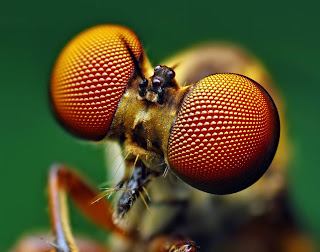
Robber fly - Nature photographer Thomas Shahan specializes in amazing portraits of tiny insects. It isn't easy. Shahan says that this Robber Fly (Holcocephala fusca), for instance, is "skittish" and doesn't like its picture taken.

Eye-popping bug photos

Nature by Numbers (Video)

"A Summary" – Apr 2, 2011 (Kryon channeled by Lee Carroll) (Subjects: Religion, Shift of Human Consciousness, 2012, Intelligent/Benevolent Design, EU, South America, 5 Currencies, Water Cycle (Heat up, Mini Ice Ace, Oceans, Fish, Earthquakes ..), Middle East, Internet, Israel, Dictators, Palestine, US, Japan (Quake/Tsunami Disasters , People, Society ...), Nuclear Power Revealed, Hydro Power, Geothermal Power, Moon, Financial Institutes (Recession, Realign integrity values ..) , China, North Korea, Global Unity,..... etc.) -
"The Quantum Factor" – Apr 10, 2011 (Kryon channeled by Lee Carroll) (Subjects: Galaxies, Universe, Intelligent design, Benevolent design, Aliens, Nikola Tesla (Quantum energy), Inter-Planetary Travel, DNA, Genes, Stem Cells, Cells, Rejuvenation, Shift of Human Consciousness, Spontaneous Remission, Religion, Dictators, Africa, China, Nuclear Power, Sustainable Development, Animals, Global Unity.. etc.) - (Text Version)


“ … Here is another one. A change in what Human nature will allow for government. "Careful, Kryon, don't talk about politics. You'll get in trouble." I won't get in trouble. I'm going to tell you to watch for leadership that cares about you. "You mean politics is going to change?" It already has. It's beginning. Watch for it. You're going to see a total phase-out of old energy dictatorships eventually. The potential is that you're going to see that before 2013.

They're going to fall over, you know, because the energy of the population will not sustain an old energy leader ..."

(Live Kryon Channelings was given 7 times within the United Nations building.)

"Update on Current Events" – Jul 23, 2011 (Kryon channelled by Lee Carroll) - (Subjects: The Humanization of God, Gaia, Shift of Human Consciousness, 2012, Benevolent Design, Financial Institutes (Recession, System to Change ...), Water Cycle (Heat up, Mini Ice Ace, Oceans, Fish, Earthquakes ..), Nuclear Power Revealed, Geothermal Power, Hydro Power, Drinking Water from Seawater, No need for Oil as Much, Middle East in Peace, Persia/Iran Uprising, Muhammad, Israel, DNA, Two Dictators to fall soon, Africa, China, (Old) Souls, Species to go, Whales to Humans, Global Unity,..... etc.)

"Recalibration of Free Choice"– Mar 3, 2012 (Kryon Channelling by Lee Caroll) - (Subjects: (Old) Souls, Midpoint on 21-12-2012, Shift of Human Consciousness, Black & White vs. Color, 1 - Spirituality (Religions) shifting, Loose a Pope “soon”, 2 - Humans will change react to drama, 3 - Civilizations/Population on Earth, 4 - Alternate energy sources (Geothermal, Tidal (Paddle wheels), Wind), 5 – Financials Institutes/concepts will change (Integrity – Ethical) , 6 - News/Media/TV to change, 7 – Big Pharmaceutical company will collapse “soon”, (Keep people sick), (Integrity – Ethical) 8 – Wars will be over on Earth, Global Unity, … etc.) - (Text version)

“… 4 - Energy (again)


The natural resources of the planet are finite and will not support the continuation of what you've been doing. We've been saying this for a decade. Watch for increased science and increased funding for alternate ways of creating electricity (finally). Watch for the very companies who have the most to lose being the ones who fund it. It is the beginning of a full realization that a change of thinking is at hand. You can take things from Gaia that are energy, instead of physical resources. We speak yet again about geothermal, about tidal, about wind. Again, we plead with you not to over-engineer this. For one of the things that Human Beings do in a technological age is to over-engineer simple things. Look at nuclear - the most over-engineered and expensive steam engine in existence!

Your current ideas of capturing energy from tidal and wave motion don't have to be technical marvels. Think paddle wheel on a pier with waves, which will create energy in both directions [waves coming and going] tied to a generator that can power dozens of neighborhoods, not full cities. Think simple and decentralize the idea of utilities. The same goes for wind and geothermal. Think of utilities for groups of homes in a cluster. You won't have a grid failure if there is no grid. This is the way of the future, and you'll be more inclined to have it sooner than later if you do this, and it won't cost as much….”


"Fast-Tracking" - Feb 8, 2014 (Kryon Channelling by Lee Carroll) - (Reference to Fukushima / H-bomb nuclear pollution and a warning about nuclear > 20 Min)

Obama unveils landmark regulations to combat climate change

Obama unveils landmark regulations to combat climate change
In a bid to combat climate change, US President Barack Obama announced the Clean Power Plan on Monday, marking the first time power plants have been targeted by mandatory regulations on carbon dioxide emissions in the US.
Google: Earthday 2013
Showing posts with label Birds. Show all posts

Friday, February 7, 2020

Wind farm shuts down turbines to protect birds and bats

DutchNews, February 6, 2020 

Photo: DutchNews.nl 

A wind farm in the province of Zeeland is the first to fit a system to switch off turbines automatically to guarantee the safety of nearby birds and bats, Omroep Zeeland reports. 

Wind farm Krammer is situated near the Krammersluizen in the middle of three Natura 2000 protected nature reserves. 

A number of the park’s 34 turbines have been fitted with cameras, microphones and loudspeakers, and mainly cover the area where the rare sea eagle hunts and breeds. 

If the camera spots a sea eagle at a distance of 600 metres the turbine is stopped automatically. The detection system also cuts the power when other birds venture too near, such as cranes, spoonbills and great egrets. 

The wind farm loses between €120,000 and €180,000 a year because of the stoppages. ‘It’s quite a lot of money. But we really want the birds to stay in the area, particularly the sea eagle,’ project manager Gijs van Hout told the broadcaster. 

Not all birds manage to steer clear of the turbine blades but they are not dying in great numbers. The tip of the blades is 60 metres from the ground which means most birds pass underneath, ecologist Roland-Jan Buijs said. ‘But sea eagles mostly look down from higher up and the system was designed for them,’ Buijs explained.

Bats are detected by recording the ultrasonic sounds the animals make. Three such indications of the bat’s presence will stop the turbine until no ultrasonic sound is heard for the duration of 15 minutes. 

It is rare for the park’s turbines to be working simultaneously on any given day and the park is keen to reduce energy loss. It may also employ loudspeakers to keep the birds from coming too close to the blades. 

‘But we are still exploring that possibility. The question is what the effect of the sound will be on the birds which look for food and rest up at the foot of the turbines. If it chases them off we shouldn’t use it,’ Buijs said.

Sunday, January 20, 2019

Wind farm 'predator' effect hits ecosystems: study

Yahoo – AFP, Patrick GALEY, November 6, 2018

Wind farms are known to be harmful to birds, disrupting their migration patterns
and causing above average death rates (AFP Photo/PATRICIA CASTELLANOS)

Paris (AFP) - Wind farms act as a top "predator" in some ecosystems, harming birds at the top of the food chain and triggering a knock-on effect overlooked by green energy advocates, scientists said Monday.

Wind is the fastest-growing renewable energy sector, supplying around four percent of global electricity demand.

Close to 17 million hectares -- an area roughly the size of Tunisia -- is currently used for generating wind energy worldwide, and researchers warned that developers had "greatly underestimated" the impact the technology has on wildlife.

In new research, an international team of scientists studied the effects of wind turbine use in the Western Ghats, a UNESCO-listed range of mountains and forest spanning India's west coast region and a global "hotspot" of biodiversity.

They found that predatory raptor birds were four times rarer in areas of plateau where wind turbines were present, a disruption that cascaded down the food chain and radically altered the density and behaviour of the birds' prey.

In particular, the team observed an explosion in the raptors' favourite meal, fan-throated lizards, in areas dominated by the turbines.

Furthermore, they saw significant changes in lizard behaviour and appearance, living as they were in an essentially predator-free environment.

"What was remarkable to us were the subtle changes in behaviour, morphology, and physiology of those lizards," Maria Thaker, assistant professor at the Indian Institute of Science's Centre for Ecological Sciences and lead study author, told AFP.

As the levels of raptors fell around the turbines, so too did the rate of predatory attacks the lizards had to deal with.

As a result, the team found that lizards living in and around wind farms had lessened their vigilance against possible danger.

Simulating "predator attacks", humans in the study could get up to five times closer to a lizard in the wind farm zones than one living away from the turbines before the creatures fled.

Graphic on how a lizard species has been found to thrive in an 
area where wind farms have caused the deaths of raptors that 
prey on them (AFP Photo/John SAEKI)

'Be smart with green energy'

After testing, the lizards near windmills were found to have lower levels of a stress hormone, something that must have emerged in the two decades since wind farms were built in the Western Ghats.

Wind farms are known to be harmful to birds, disrupting their migration patterns and causing above average death rates.

Thaker said her research, published in the journal Nature Ecology & Evolution, showed that wind farms replicated the role of the top predator in the food chain by keeping the raptors at bay.

"They trigger changes to the balance of animals in an ecosystem as if they were top predators," she said.

"They are the 'predators' of raptors -- not in the sense of killing them, but by reducing the presence of raptors in those areas."

As man-made carbon emissions continue to rise, Thaker said wind energy was vital in mitigating the effects of climate change.

But with evidence that the impact of wind farms reaches further into Earth's ecosystems than previously thought, she called for greater consideration of the environmental impact of the vital green energy source.

"It took decades for scientists to realise that wind-turbines were negatively affecting animals that fly," Thaker said.

"We need to be smart about how we deploy green energy solutions. Let's reduce our footprint on the planet and put turbines in places that are already disturbed in some way -- on buildings for example."

Tuesday, October 10, 2017

Italy's high-rise forests take root around the world

Yahoo – AFP, Céline CORNU, October 8, 2017

Milanese architect Stefano Boeri's leafy project is now being exported around
the world (AFP Photo/MIGUEL MEDINA)

Milan (AFP) - As balconies bristle with tree branches and sunshine dapples the leaves of thousands of plants, two apartment buildings in the heart of Milan have almost disappeared under lush forest.

The brainchild of Milanese architect Stefano Boeri, the Bosco Verticale (Vertical Forest) uses more than 20,000 trees and plants to adorn the high-rise buildings from top to bottom – a project now being exported all over the world, from China to the Netherlands.

The two original leafy towers dominate the skyline in the northern Italian city, giving residents -- including celebrities like footballer Ivan Perisic -- an enviable view over the new district of Porta Nuova and beyond.

Cherry, apple and olive trees spill over balconies alongside beeches and larches, selected and positioned according to their resistance to wind and preference for sunlight or humidity.

Boeri said the idea came from his obsession with trees and determination to make them "an essential component of architecture," particularly as a weapon to combat climate change.

"I was in Dubai in 2007 and I watched this city growing in the middle of the desert, with more than 200 glass towers multiplying the effect of heat," he recalls.

He wanted instead to create something that "as well as welcoming life, can contribute to reducing pollution, because trees absorb microparticles and CO2".

"Cities now produce about 75 percent of the CO2 present in the atmosphere. Bringing more trees into the city means fighting the enemy on the spot," he said.

Milanese architect Stefano Boeri's leafy project is now being exported around the
world (AFP Photo/MIGUEL MEDINA)

'Best Tall Building Worldwide'

Opened in 2014, the Vertical Forest won the prestigious Frankfurt International Highrise Award, and the Chicago Council on Tall Buildings and Urban Habitat named it Best Tall Building Worldwide.

"It's a unique thing to live here, we're in direct contact with the plants while being in the city centre and in a super modern skyscraper," says Simona Pizzi, who can see the mountains from her 14th floor apartment.

"The plants have developed a lot over the past three years, and we see them changing with the seasons," adds the proud owner of an apple tree, where the white flowers contrast magnificently with the green foliage.

Boeri worked closely with botanists to create a nursery of a thousand trees that have been trained to grow under specific conditions.

The team faced numerous challenges, from how the balconies should be structured to take the weight of the plants, to how to secure the tree roots and what needed to go into the soil.

They even carried out resistance tests at a hurricane centre in Miami.

"For every human being living in the building, there are about two trees, 10 shrubs and 40 plants," Boeri said.

The future of housing?

The vegetation soon transformed into a veritable wildlife park: 9,000 ladybirds brought over from Germany to eat parasites -- to leave the plants pesticide free -- multiplied over the space of a few weeks.

Cherry, apple and olive trees spill over balconies alongside beeches and larches, 
selected and positioned according to their resistance to wind and preference for
sunlight or humidity (AFP Photo/MIGUEL MEDINA)

"The extraordinary thing that we did not expect was the incredible amount of birds that nested here. We have small hawks on the roofs, and swifts that had previously disappeared from Milan," Boeri said.

The architect and his team are now working on a dozen or so Vertical Forest projects around the world, including Lausanne in Switzerland, Utrecht in the Netherlands, Sao Paolo in Brazil and Tirana in Albania.

The aim in Eindhoven in the Netherlands is to swap the sort of luxury pads seen in the Milan project -- which go for some 11,000 euros ($12,900) per square metre -- for social housing, a project Boeri says he's particularly keen on.

And because the cost of the trees is low, it's not an unreasonable ambition, he says.

He is also thinking big in China, where not only are two towers under construction in Nanjing and a hotel in the works in Shanghai, but there are plans for a "Forest City" of some 200 buildings in Liuzhou.

"China is now realising it faces the dramatic problem of air pollution, but also of uncontrolled urbanisation, with cities growing out of suburbs, creating megacities," he said.

"Every year fifteen million peasants abandon the countryside to come to the city, we have to come up with some answers, with new green cities," says Boeri, who took part in the COP21 conference on climate change in Paris in 2015.

The architect has not patented the Vertical Forest and has even written a book revealing the secrets and techniques behind it, which he hopes will encourage a new, greener way of developing cities.


Thursday, July 10, 2014

Neonicotinoids linked to recent fall in farmland bird numbers

Research demonstrates for the first time the knock-on effects to other species of class of insecticides known to harm bees

The Guardian, Damian Carrington,  Wednesday 9 July 2014

A barn swallow hunting over a flowering oilseed rape field, Spain. Photograph: Alamy

New research has identified the world’s most widely used insecticides as the key factor in the recent reduction in numbers of farmland birds.

The finding represents a significant escalation of the known dangers of the insecticides and follows an assessment in June that warned that pervasive pollution by these nerve agents was now threatening all food production.

The neonicotinoid insecticides are believed to seriously harm bees and other pollinating insects, and a two-year EU suspension on three of the poisons began at the end of 2013. But the suspected knock-on effects on other species had not been demonstrated until now.

Peer-reviewed research, published in the leading journal Nature this Wednesday, has revealed data from the Netherlands showing that bird populations fell most sharply in those areas where neonicotinoid pollution was highest. Starlings, tree sparrows and swallows were among the most affected.

At least 95% of neonicotinoids applied to crops ends up in the wider environment, killing the insects the birds rely on for food, particularly when raising chicks.

The researchers, led by Hans de Kroon, an ecologist at Radboud University, in the Netherlands, examined other possible reasons for the bird declines seen during the study period of 2003 to 2010, including intensification of farming. But high pollution by a neonicotinoid known as imidacloprid was by far the largest factor.

“It is very surprising and very disturbing,” de Kroon said. Water pollution levels of just 20 nanograms of neonicotinoid per litre led to a 30% fall in bird numbers over 10 years, but some water had contamination levels 50 times higher. “That is why it is so disturbing – there is an incredible amount of imidacloprid in the water,” he said. “And it is not likely these effects will be restricted to birds.”

De Kroon added: “All the other studies [on harm caused by neonicotinoids] build up from toxicology studies. But we approached this completely from the other end. We started with the bird population data and tried to explain the declines. Our study really makes the evidence complete that something is going on here. We can’t go on like this any more. It has to stop.”

David Goulson, a professor at the University of Sussex, who was not involved in the new studies, said the research was convincing and ruled out likely alternative causes of bird decline. “The simplest, most obvious, explanation is that highly toxic substances that kill insects lead to declines in things that eat insects.”

There was little reason to doubt that wildlife in the UK and other countries were not suffering similar harm, he said. “This work flags up the point that this isn’t just about bees, it is about everything. When hundreds or thousands of species or insect are being wiped out, it’s going to have impacts on bats, shrews, hedgehogs, you name it. It is pretty good evidence of wholesale damage to the environment.”

Goulson said that, unlike the Netherlands, the UK did not monitor neonicotinoid pollution and the EU ban would not remove the substances from the environment. “They are still being widely used, as the moratorium only applies to three neonicotinoids and some crops. There is still a lot of them going into the environment. The door is far from shut.”

A spokesman for Bayer CropScience, which makes the neonicotinoid that was examined in the study, disputed the findings. “It provides no substantiated evidence of the alleged indirect effects of imidacloprid on insectivorous birds. Bayer CropScience is working with the Dutch authorities and agricultural stakeholders to ensure the safe use of imidacloprid-containing crop protection products and to preserve the environment.”

He added: “Neonicotinoids have gone through an extensive risk assessment which has shown that they are safe to the environment when used responsibly according to the label instructions.”

But de Kroon said new research, including his own, was showing that neonicotinoids posed an even greater threat than had been anticipated and new regulations had to take this into account. In 2012, MPs warned regulators appeared to be “turning a blind eye” to the harm caused by neonicotinoids.

David Gibbons, head of the RSPB centre for conservation science, said: “This elegant and important study provides worrying evidence of negative impacts of neonicotinoid insecticides on birds. Monitoring of neonicotinoid pollution in UK soils and waterways is urgently required, as is research into the effects of these insecticides on wildlife.”

A Defra spokesperson said: “Pesticide use across Europe is tightly regulated to protect the environment and public health – [pesticides] are a safe, effective and economical means of managing crops. We continue to review evidence on neonicotinoids.”

Also on Wednesday, further research showing that neonicotinoids damage the natural ability of bees to collect food was published in the journal Functional Ecology. The work used tiny tags to track bees and found those exposed to the insecticide gathered less pollen.

“Exposure to this neonicotinoid seems to prevent bees from being able to learn essential skills,” said Nigel Raine, a professor at the University of Guelph, Canada. He said the regulatory tests, which only looked for short-term, lethal effects, were failing to prevent serious harm. “These tests should be conducted for extended periods to detect the effects of chronic exposure.”

Related Articles:

Wednesday, May 7, 2014

Small Australian marsupials in sudden decline

Yahoo – AFP, 7 May 2014

A spotted quoll is seen in its enclosure at Taronga Zoo in Sydney
on May 7, 2014. (AFP)

Small, furry marsupials such as the bandicoot, quoll and tree possums are in dramatic decline in Australia's north and feral cats could be the cause, according to analysis reported Wednesday.

Chris Johnson, a wildlife conservation professor from the University of Tasmania, said small mammal species were at risk of extinction across the continent, but the changes in the north were marked.

"There's a pretty clear picture and it shows that lots of species have declined dramatically," Johnson told AFP.

A red-tailed phascogale is seen in its
 enclosure at Taronga Zoo in Sydney
on May 7, 2014. (AFP)
"Where we can infer the timing of decline, it's been fairly recent and there are now large areas where small mammals are either very rare or don't exist but the habitat looks like it should support small mammals."

Johnson said while scientists discussed the changes as a "new wave of decline" it was not clear how sudden it was except that it became very noticeable in the early 1990s, particularly in places such as Kakadu National Park, a conservation area in the Northern Territory.

About 20 small native mammals have disappeared from Kakadu in recent decades including rat-like bandicoots, northern quolls, tree possums, and the weasel-like phascogale, he said, adding that similar declines had occurred elsewhere.

New analysis from a database of current mammal populations reported to a meeting of experts in Canberra Wednesday has allowed researchers to compare the current wave of extinction across different species, with those in the past, Johnson said, adding it revealed some common factors.

"First, the extinctions are occurring mainly in ground-dwelling animals of small body-size which live in open, dry habitat. This points the finger of suspicion strongly at an introduced predator -- the cat," he said.

A spotted quoll is seen in its enclosure at Taronga Zoo in Sydney
on May 7, 2014. (AFP)

"We have seen similar extinction patterns driven by predators like foxes in southern Australia -- so the big question was: 'Is history repeating itself, or is it something new?'"

He said the declines were in species eaten by cats, an animal believed to have been introduced with European settlement in the late 1700s.

"Where there are no cats there have been no declines," he said.

He said because cats had been around for so long and the declines were more recent, the question was what had changed to make them such a damaging predator.

Johnson said the use of fire by graziers seemed to have played a role as well, given there had been no significant land clearing or evidence of disease in northern Australia.

"It is probably no one thing, but the data points to a combination of several effects -- all of which tend to favour the hunting style adopted by cats which places small ground-dwelling animals at greater risk," he said.

Related Articles:

“…. The First Look

About 200,000 years ago is when it literally began. The concept of the "divine seeding" of planet Earth happened at that point, and the fields metaphorically started to be ploughed. There is an issue and we're going to call it the way species work with Gaia. This is something that happened simultaneously with the grid creation of Gaia. For now we give you something that no one has thought about. When we speak of the grids of the planet, you make an assumption that these grids always existed on the planet. For the planet is old and you might say, "Well the grids have always been there." But I'm here to tell you that only one was always there, and that's the magnetic grid. But it was spiritually void. That is to say, it only had that which was created from the Earth's core movement. Today, when we talk about the grids of the planet, our conversation involves the consciousness of humanity, which is imbued upon the magnetic grid. We also tell you about the Crystalline Grid and about the Grid of Gaia consciousness. Both of these react to Human compassion.

Now, here is the puzzle: If you don't have divine Human consciousness, then what about the grids? Do they exist without the Human Being? The answer is that they needed to be created simultaneously with the seeding of divine DNA. So what the Pleiadians did was not only to start the seeds of humanity's change into divine DNA, but they created the conscious grids of Gaia as well. They had to, for the conscious grids of Gaia are a confluence of humanity's decisions brought to Gaia's energy. The consciousness that we are talking about is the spiritually sanctioned Human Being that exists with a piece of God inside him, and with DNA that has 23 chromosomes instead of the common 24 that all the others have through biological evolution.

Let us back up and say it again and make it simpler, my partner [admonition to Lee to speak more plainly]. The triad of grids on this planet that we have spoken of over and over are the consciousness grids of Gaia, and were created at the same time as the seeding of humanity with Pleiadian DNA. For all the teachings we've been giving, especially about the Crystalline Grid, these grids have been reacting to Human consciousness and compassion. Therefore, the very essence of the current Gaia energy is also related to the creation of humanity.

These are the attributes of the Pleiadians work 200,000 years ago, and it was done quantumly in ways that you have no conscious awareness of at the moment. For these things are beyond your ability to understand right now, since you are still in a single-digit dimensionality. But the result back then was "a conscious Gaia." So you might say Gaia itself was actually created quantumly from the Seven Sisters energy, just like you.

The Gaia that existed before then was still Gaia, but not as it is now. It was a Gaia that was creating the dirt on the earth and the energy of biological life of the earth. It was the mother of all life on the planet, but not a Gaia that responded to Human consciousness. That's very different. So Gaia greatly expanded when the Pleiadians came, and that was by design.

It took 110,000 years for this to settle itself, and for the ground to be ready for more than 16 species of Human Beings to leave so that only one was left. When that occurred at approximately 90,000 years ago is when you can start calibrating who Humans were and who they became.

The Others


Now, what about all of those other types of Humans, and how did they leave? I'm  going to give you an attribute of something that exists even today. This is difficult for my partner, for he has not heard this before. This information has not been brought in this fashion before. Go slowly, my partner.


The variety of species on this planet comes and goes accordingly as they are needed for the energy they create. So one of the tasks of Gaia is to create and eliminate species. When they are no longer needed for the purpose of Gaia's development, they cease to exist and they die out. If new life is necessary, if new concepts of life are needed, Gaia is cooperative and they are then created. The actual creation of species is something that environmentalists have not clearly seen. That is to say the mechanics of how it works is not fully recognized as something that is strongly coordinated with your weather. But you have already seen the mechanics of some of this in your long-term studies, for you have already noted the coming and going of many species through the ages. It's ongoing.


The Appropriateness of the Elimination of Species


Now, along come Humans and they see all this coming and going of living things, but they want to save them all - all the species that exist. For in their linear mind, all species should remain and exist, since they are here. The attribute of Gaia, however, is to eliminate them, cull them out, to bring in new ones. I just gave you the mechanics of the reasons species come and go. It's appropriate and is a natural building process for new species.


When the Pleiadians started to create the grids of the planet, Gaia cooperated in what was to come, knew the purpose, and what was needed for survival of this new spiritual Human. Gaia knew this since the energy of Gaia had seen it before [reason given below]. So the old attribute, which needed many kinds of Human Beings, slowly died out. It was natural. There was not a war. There were no horrible plagues. There were no volcanoes or tsunamis that consumed them. Through attrition, appropriateness, and 110,000 years, they disappeared.


So approximately 110,000 years ago, there was only one kind left, and this is science, for everything that you study will bear this out, and anthropologists have already seen it and have asked, "What happened back then at this time that would have eliminated these other kinds of Human variety?" It's a puzzle in science that I have just answered, for science looks only for physical events as triggers. But instead, it's the marriage of Gaia consciousness that you call "Mother Nature," which facilitated this. It's the same today when you see a variety of species diminish as Humans take over a greater portion of the earth. I'll call this "the appropriate elimination of unique life forms, which allow for the growth of global awareness and quantum evolution." Some species only exist to allow others to climb the ladder of nature, then they disappear. Gaia knows what the ladder looks like. You don't. ... ”


Monday, May 5, 2014

Birds in Chernobyl Adapting to Ionizing Radiation, Finds Study

Sci-News.com, Apr 29, 2014

A new study, reported in the journal Functional Ecology and headed by Dr Ismael Galván from the Spanish National Research Council, is the first evidence that wild animals adapt to ionizing radiation and the first to show that birds have greatest problems coping with radiation exposure.

A hawfinch, Coccothraustes coccothraustes, from the Chernobyl exclusion
zone. Image credit: T.A. Mousseau / A.P. Møller.

The Chernobyl disaster, which occurred on 26 April 1986 in Ukraine, had catastrophic environmental consequences. However, because the region remains heavily contaminated by radiation, it represents an accidental ecological experiment to study the effects of ionizing radiation on wild animals.

Ionizing radiation produces oxidative stress, but animals can adapt to their exposure with physiological adaptive responses. However, the role of radioadaptive responses in wild populations remains poorly known.

Previous studies of the level of antioxidants and oxidative damage at Chernobyl are limited to humans, two bird species and one species of fish. Because different species vary widely in their susceptibility to radiation, this limited data has made it difficult to study how wild animals adapt to radiation exposure.

At 8 sites inside and close to the Chernobyl Exclusion Zone, Dr Galván and his colleagues used mist nets to capture 152 birds from 16 different species: red-backed shrike; great tit; barn swallow; wood warbler; blackcap; whitethroat; barred warbler; tree pipit; chaffinch; hawfinch; mistle thrush; song thrush; blackbird; black redstart; robin and thrush nightingale.

The scientists measured background radiation levels at each site, and took feather and blood samples before releasing the birds. They then measured levels of glutathione, oxidative stress and DNA damage in the blood samples, and levels of melanin pigments in the feathers.

Levels of radiation in the study area ranged from 0.02 to 92.90 micro Sieverts per hour.

The findings show that with increasing background radiation, the birds’ body condition and glutathione levels increased and oxidative stress and DNA damage decreased. The birds which produce larger amounts of pheomelanin and lower amounts of eumelanin pay a cost in terms of poorer body condition, decreased glutathione and increased oxidative stress and DNA damage.

“The findings are important because they tell us more about the different species’ ability to adapt to environmental challenges such as Chernobyl and Fukushima,” Dr Galván concluded.
______

Ismael Galván et al. Chronic exposure to low-dose radiation at Chernobyl favors adaptation to oxidative stress in birds. Functional Ecology, published online April 24, 2014; doi: 10.1111/1365-2435.12283

Related Articles:

"Fast-Tracking" - Feb 8, 2014 (Kryon Channelling by Lee Carroll) - (Reference to Fukushima / H-bomb nuclear pollution and a warning about nuclear  (> 20 Min)

Thursday, January 16, 2014

Ibises' flight precision stuns researchers

Google – AFP, Mariette le Roux (AFP), 15 January 2014

A flock of white ibises (eoducimus albus) overflies the Suchitlan Lake, in
 Azacualpa, 93 km north of San Salvador, on February 6, 2010 (AFP/File,
Jose Cabezas)

Paris — Ibises flying in a V formation synchronise the flapping of their wings with a degree of precision previously thought impossible, astounded researchers said Wednesday.

A team that measured every single wing beat of 14 birds during 43 minutes of a migratory flight found that each animal positioned itself in just the right place in relation to the others, and timed its flaps so as to gain the most aerodynamic advantage.

From the lone leader at the point of the V, the ibises fanned out to the back and side at an angle of about 45 degrees, and flapped their wings in phase.

This allowed each bird to gain as much lift as possible from the small area of air "upwash" in the wake of the preceding bird, while they carefully avoided areas of "downwash" that would push them earthward.

"We were amazed," Steven Portugal of the Royal Veterinary College in Hertfordshire, England, told AFP of the results published in the journal Nature.

"The amazing control and coordination required for the birds to stay in position and exhibit this precise flap timing was, we thought, too hard and not possible."

V formation saves energy

Scientists have long concluded that geese, pelicans and other flocking species probably fly in a V-shaped formation to save energy, riding on drafts created by those in front.

But the degree of precision with which this is achieved was not previously understood.

"We are the first... to identify the aerodynamic interactions between individuals within a V, and to record the mechanism that birds in a V use to capture upwash (rising air)," Portugal said.

The team of researchers from Britain, Austria and Germany used 14 northern bald ibises, hand-reared at the Vienna Zoo, for the experiment.

The endangered birds had human foster parents whom they had been taught to follow in a microlight airplane -- thus learning their migratory route to their wintering grounds in Italy.

For the test, each of the birds had a lightweight GPS (Global Positioning System) locator mounted on its back, as well as an "accelerometer" to measure how often it flapped its wings, and how hard.

A graphic showing how groups of birds coordinate in flight to perfect
their migration techniques (AFP)

The birds and their foster parents then set off from Salzburg, Austria, to Italy's Tuscan region.

A total of 180,000 wing flaps were measured during a 43-minute section of the journey.

"What we totally weren't expecting was that they might be paying attention to the flap-phasing of the bird ahead," Portugal's colleague and study co-author James Usherwood said in a Nature video.

Amazingly, they found the trailing bird's wing flaps closely followed the pattern of the draft created by the preceding bird -- it can be visualised as an unbroken wave formed as the wings flap up and down.

The scientists found that if a bird in the V is a full wavelength behind its leader, their wing positions match (both tips up, or both down).

But half a wavelength behind, its wings would be in the inverse position of the bird ahead if it.

The findings revealed a "remarkable awareness and ability of birds" to match their flock mates' wing flaps, Portugal said.

The research may have implications for the aviation industry.

"Airlines have been investing heavily to try and understand how birds can get so close together to take advantage of this upwash -- they want their planes to do the same thing," he said.

Allied bomber pilots in World War II are rumoured to have noticed fuel savings when flying in a V formation.

"Understanding how birds can behave together to experience positive aerodynamic interactions can allow us to save fuel in such flying machines" as drones or ornithopters, which mimic wing-flapping insects, Portugal said.

Related Articles:


Abraham-Hicks on Channeling


This video clip was recorded at the most recent Abraham-Hicks workshop in Orlando, Florida on March 27th, 2011. In the clip, Abraham addresses the subject of channeling and discusses why Esther and Jerry don't prefer to use the word, and why Esther was ideally predisposed to translate for Non Physical Source Energy before Abraham came along.

Wednesday, June 26, 2013

Cambodian tailorbird: A new species seen in Phnom Penh

BBC News, 26 June 2013

Studies to differentiate the new species from other tailorbirds included
analyses of their songs

Related Stories

A species of bird that is completely new to science has been discovered - hiding in plain sight in Cambodia's capital Phnom Penh.

The Cambodian tailorbird (Orthotomus chaktomuk), as it has been named, was first spotted in 2009 during routine checks for avian flu.

More specimens have since been found in regions around the city and discerned from similar tailorbird species.


Tailorbirds are in the warbler family, and get their name from the meticulous preparation of their nests, weaving leaves together.

A detailed set of tests - from the birds' plumage to their songs and their genes - has now shown that O. chaktomuk is in fact a separate, new species.

It is exceptionally uncommon for undiscovered bird species to be found in urban contexts, but Oriental Bird Club council member Richard Thomas said that earlier in the year, he "went and saw this remarkable new tailorbird myself - in the middle of a road construction site".

The authors of the paper suggest that O. chaktomuk inhabits a small area, made up largely of dense scrubland in the floodplain of the Mekong river - at the edge of which Phnom Penh lies.

Birdwatchers do not tend to target this kind of ecosystem because most of the species it supports are abundant and widespread elsewhere in Southeast Asia.

"The modern discovery of an un-described bird species within the limits of a large populous city - not to mention 30 minutes from my home - is extraordinary," said study co-author Simon Mahood of the Wildlife Conservation Society.

"The discovery indicates that new species of birds may still be found in familiar and unexpected locations."

Because of the small and shrinking nature of the birds' habitat, the team has recommended that the bird be listed as "Near Threatened" on the International Union for Conservation of Nature's Red List.

Related Articles:

Now, what about all of those other types of Humans, and how did they leave? I'm  going to give you an attribute of something that exists even today. This is difficult for my partner, for he has not heard this before. This information has not been brought in this fashion before. Go slowly, my partner.


The variety of species on this planet comes and goes accordingly as they are needed for the energy they create. So one of the tasks of Gaia is to create and eliminate species. When they are no longer needed for the purpose of Gaia's development, they cease to exist and they die out. If new life is necessary, if new concepts of life are needed, Gaia is cooperative and they are then created. The actual creation of species is something that environmentalists have not clearly seen. That is to say the mechanics of how it works is not fully recognized as something that is strongly coordinated with your weather. But you have already seen the mechanics of some of this in your long-term studies, for you have already noted the coming and going of many species through the ages. It's ongoing.


The Appropriateness of the Elimination of Species


Now, along come Humans and they see all this coming and going of living things, but they want to save them all - all the species that exist. For in their linear mind, all species should remain and exist, since they are here. The attribute of Gaia, however, is to eliminate them, cull them out, to bring in new ones. I just gave you the mechanics of the reasons species come and go. It's appropriate and is a natural building process for new species.


When the Pleiadians started to create the grids of the planet, Gaia cooperated in what was to come, knew the purpose, and what was needed for survival of this new spiritual Human. Gaia knew this since the energy of Gaia had seen it before [reason given below]. So the old attribute, which needed many kinds of Human Beings, slowly died out. It was natural. There was not a war. There were no horrible plagues. There were no volcanoes or tsunamis that consumed them. Through attrition, appropriateness, and 110,000 years, they disappeared.


So approximately 110,000 years ago, there was only one kind left, and this is science, for everything that you study will bear this out, and anthropologists have already seen it and have asked, "What happened back then at this time that would have eliminated these other kinds of Human variety?" It's a puzzle in science that I have just answered, for science looks only for physical events as triggers. But instead, it's the marriage of Gaia consciousness that you call "Mother Nature," which facilitated this. It's the same today when you see a variety of species diminish as Humans take over a greater portion of the earth. I'll call this "the appropriate elimination of unique life forms, which allow for the growth of global awareness and quantum evolution." Some species only exist to allow others to climb the ladder of nature, then they disappear. Gaia knows what the ladder looks like. You don't. ... ”


Thursday, September 6, 2012

New Bird-Friendly Bladeless Wind Turbine Design to be Tested and Manufactured in NJ

Treehugger, Derek Markham, Technology / Wind Technology, August 30, 2012

© Catching Wind Power

The potential damage to bird and bat populations by large wind turbines is often used as an argument against more wind power installations, and serves as great fodder for comments here on TreeHugger when we publish something about wind technology.

But there are other options for viable wind turbines that are claimed to be bird- and bat-friendly, including the Catching Wind Power (CWP) device, which will soon be tested, improved upon, and manufactured by Sigma Design.

The CWP Compressed Air Enclosed Wind Turbine is the brainchild of 89 year old Raymond Green, who invented and patented his unique version of wind power generator. Green believes these units can be manufactured in sizes ranging from small personal-use/portable units up to massively sized units that can be installed at wind farms, and that they hold significant advantages over traditional turbine designs.

According to the Green's website,

"Traditional three blade turbines knock the birds out of the sky because the birds can not see the massive, spinning, blades that turn between 80mph and 190mph, therefore hitting them and knocking them to the ground, killing them. Our design does not have any external moving parts to hit the birds. Our unit is easy to see so the birds can avoid it, and all moving parts are internal. The blades are mounted behind the windsock and inner compression cone, therefore making them nonaccessible to birds. Also, our turbines make virtually no noise."

The CWP turbine uses their patented Inner Compression Cone Technology, which is claimed to squeeze and compress the incoming air in order to be able to create more power at the turbine.

Here's their introduction to the CWP:


Green, a retired veteran, chose Sigma Design to further his design because it is a veteran-owned company, and as he says,

"There are so many disabled and unemployed veterans out there that I wanted to help ... so I searched the Internet to find someone that could manufacture and introduce my ... design to the public." - Green

For more about the turbine, see Catching Wind Power.